


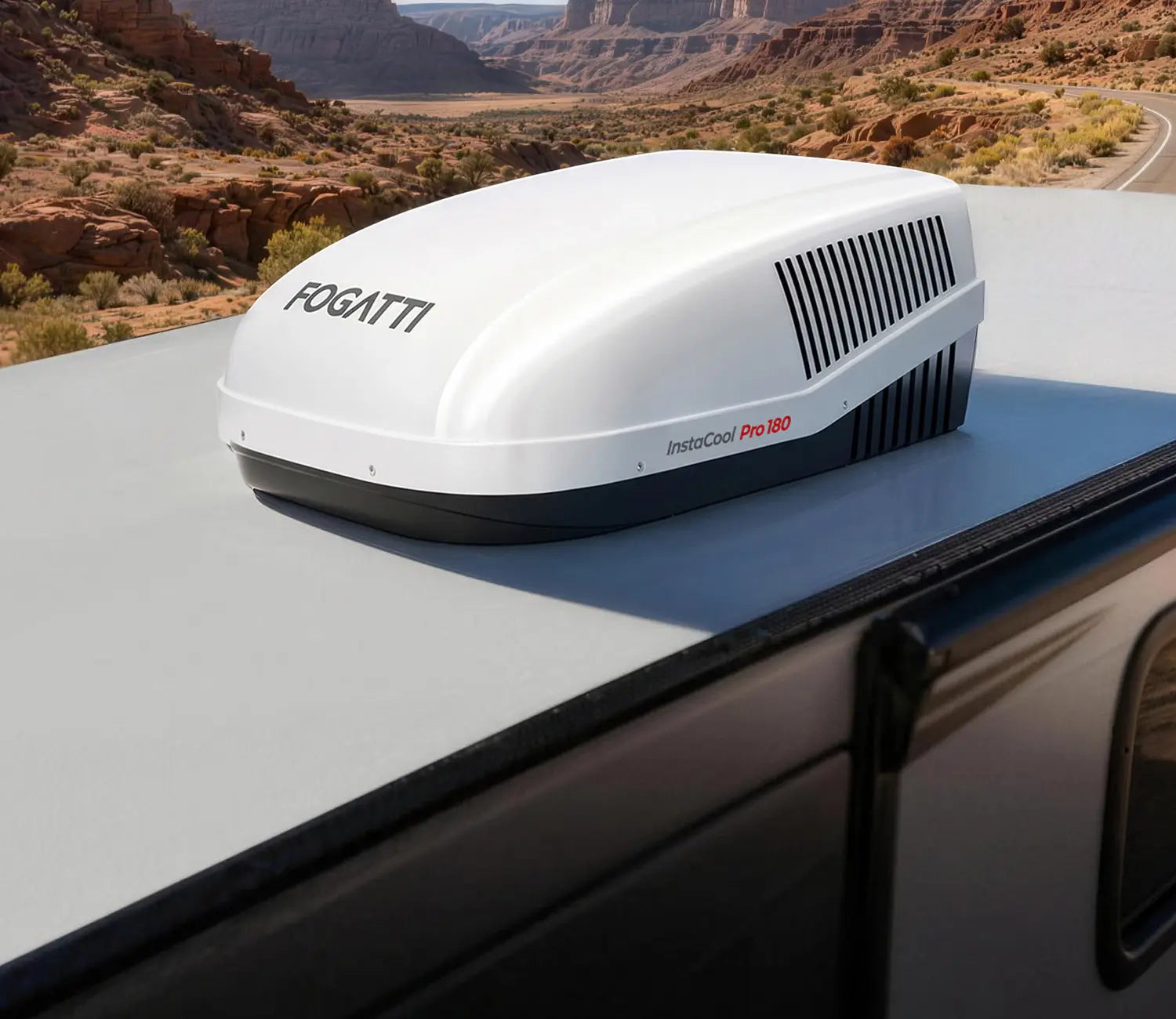
RV Air Conditioner
Stay comfortable wherever the road takes you with Fogatti RV air conditioners. From intense summer heat to cool spring and fall mornings, the InstaCool lineup gives you the flexibility to travel comfortably through changing weather and seasons.
This collection is empty
Continue shopping
AERODYNAMIC & EASY FIT
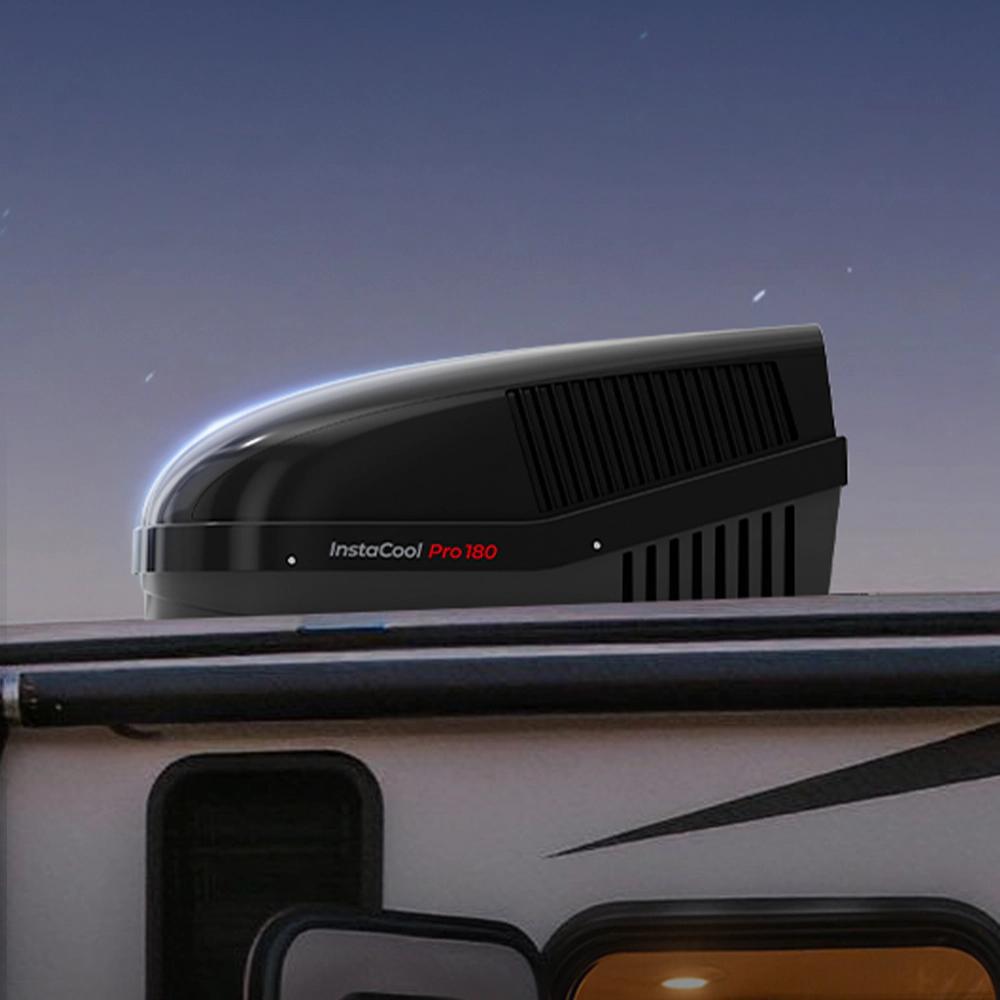
Features a sleek, UV-resistant shroud that reduces wind drag for better fuel efficiency. Drops perfectly into standard 14.25" roof openings for a seamless upgrade—no roof modifications needed.

RUGGED & RAPID COOLING
Built for the roughest roads. Premium copper tubing and a heavy-duty compressor deliver instant climate control. Reinforced anti-vibration mounts absorb shock for whisper-quiet operation.
InstaCool at a Glance — What Each Model Delivers
| Model | Cooling | Heating | Noise / Airflow | Roof Fit | Controls | Best For |
|---|---|---|---|---|---|---|
| InstaCool 110P IICompact Heat & Cool | 11,000 BTU | 1,500W heat strip | Efficient daily airflow | 14.25" × 14.25" | Standard controls | Small trailers, vans, shoulder-season weekends |
| InstaCool 135 IIValue Cooling | 13,500 BTU | Cooling only | ≤59 dB | 14.25" × 14.25" | Standard controls | Classic replacement cooling for compact to mid-size rigs |
| InstaCool 150 IIStrong Summer Cooling | 15,000 BTU | Cooling only | Up to 470 CFM / 59 dB | 14.25" × 14.25" | Standard controls | Hot-weather travel, ducted or non-ducted swaps |
| InstaCool 150P II15K + Mild Heat | 15,000 BTU | 5,120 BTU heat strip | <59 dB | 14.25" × 14.25" | Controller support | Campers who want cooling plus mild-morning warmth |
| InstaCool UltraQuiet Heat Pump | 16,000 BTU | 12,500 BTU heat pump | <43 dB / 418 CFM | 14.25" × 14.25" | Remote / ADB / WiFi app | Quiet cabins, all-season travel, low-profile comfort |
| InstaCool Pro 18KFast Cooling | 18,000 BTU | Cooling only | 52 dB / 4-speed airflow | 14.25" × 14.25" | Voice / app / remote / ADB | Medium-to-large RVs in extreme summer heat |
| InstaCool Pro MaxMaximum All-Season | 18,000 BTU | 16,000 BTU heat pump | 52 dB / dual variable-speed motors | 14.25" × 14.25" | App / voice / remote / ADB | Large RVs, hot climates, and real all-season comfort |
Choose Your InstaCool
Cooling-only models for pure summer power. Heat & Cool models for RVers who want comfort in more than one season.

InstaCool 135 II Value
Classic 13.5K replacement cooling Cooling only
- Cooling: 13,500 BTU rapid temperature drop
- Noise: Runs at ≤59 dB
- Build: UV-resistant HIPS housing
- Fit: Standard rooftop opening, ducted or non-ducted
A practical upgrade when your old rooftop AC is weak, noisy, or aging.
Best for: compact to mid-size RVs focused on warm-weather travel.

InstaCool 150 II Best Value
15K cooling for hot-weather travel Strong replacement tier
- Cooling: 15,000 BTU for fast cabin pull-down
- Airflow: Up to 470 CFM
- Noise: 59 dB operation
- Fit: Designed for common RV roof openings
The smart middle ground: stronger than entry ACs without jumping to premium 18K.
Best for: summer trips, travel trailers, older AC replacements.

InstaCool Pro 18K Fast Cool
18K single-cooling power For larger RVs and extreme summer heat
- Cooling: 18,000 BTU for faster cabin pull-down
- Airflow: 4-speed airflow control
- Noise: Around 52 dB operation
- Control: Voice, app, remote, and ADB support
The single-cool choice when heat is not the problem — brutal summer sun is.
Best for: Class C RVs, fifth wheels, larger trailers, desert routes, and open-sun campsites.

InstaCool 150P II Heat + Cool
15K cooling with heat-strip support More season flexibility
- Cooling: 15,000 BTU
- Heat: 5,120 BTU heat strip
- Noise: <59 dB
- Fit: Ducted or non-ducted options
For campers who want the value of 15K cooling with extra warmth for mild cold.
Best for: spring/fall trips, cool mornings, humid shoulder seasons.

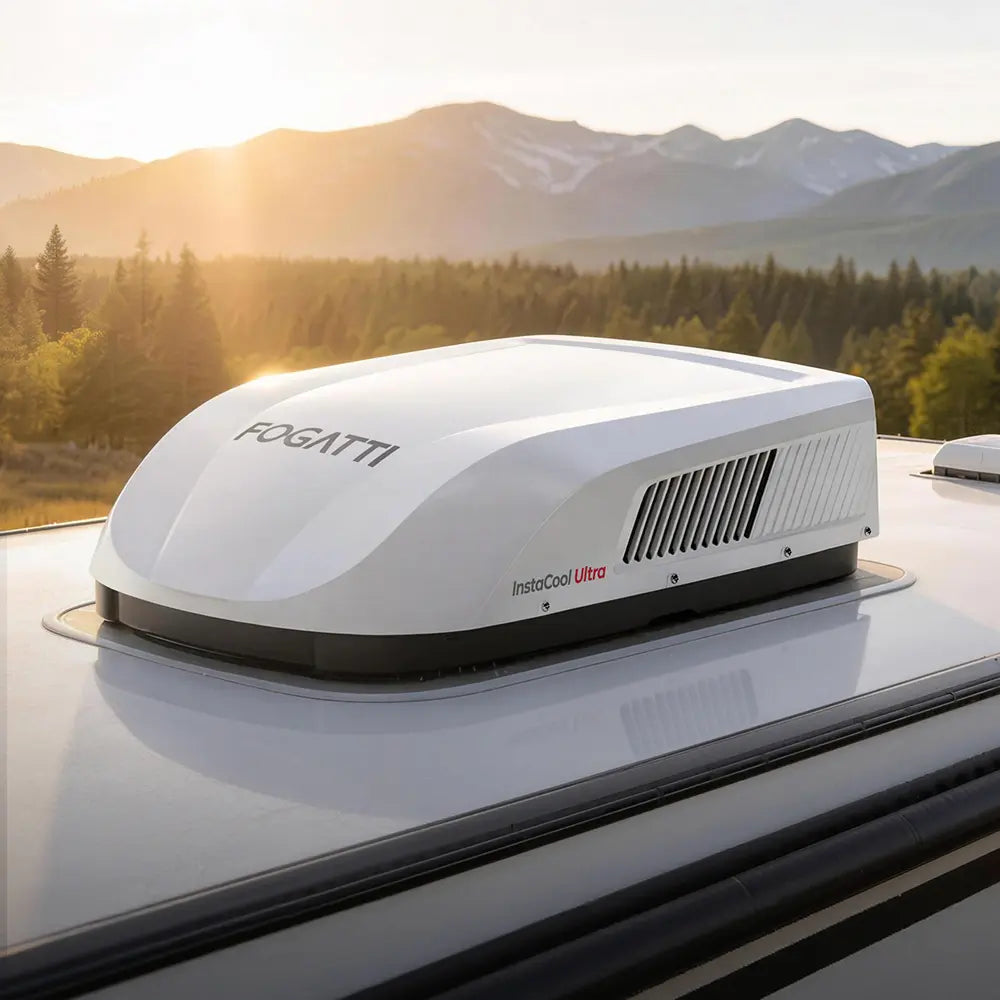
InstaCool Ultra Fast Heat & Cool
Fast heat-pump comfort with quiet operation Cooling and heating performance that stays steady in changing weather
- Cooling: 16,000 BTU for quick temperature pull-down
- Heating: 12,500 BTU heat pump for fast warm-up
- Stability: Less affected by outdoor temperature swings than basic heat-strip ACs
- Quiet: As low as 43 dB for sleeping, working, and long stays
Ultra is not just the quiet model. It is the fast-response comfort model — cools quickly, warms quickly, and holds comfort better when weather shifts.
Best for: shoulder seasons, mountain mornings, remote work, light winter travel, and RVers who notice both noise and temperature swings.

InstaCool Pro Max Maximum
18K cooling + 16K heat pump All-season flagship
- Cooling: 18,000 BTU for extreme summer heat
- Heating: 16,000 BTU heat pump
- Comfort: Dual variable-speed fan motors
- Control: App, voice, remote, and ADB
The “buy once, stop sweating it” option for larger rigs and changing weather.
Best for: Class C, fifth wheels, large trailers, hot climates, all-season road trips.
Don't take our word for it.
See what real customers and creators have to say.
Ready to Make Your RV Feel Like Home?
Pick the unit by the trip you want, not just the number on the label. Cooling-only is right for summer travelers. PTC heat is a helpful shoulder-season add-on. Heat pump models give you a more complete comfort system for changing weather.
Quick answers about these product.
Answers to common questions about installation, operation and everyday use.
Can I run this AC with a portable generator?
Can I run this AC on a 12V DC battery system or off-grid?
Will this AC operate on a 20-amp breaker?
What size RV air conditioner do I need?
How does extreme heat affect RV AC performance?
Should I choose cooling only, heat pump, or PTC heating?
What roof opening size do RV rooftop air conditioners need?
What is the difference between ducted and non-ducted systems?
Are RV air conditioners noisy?
How often should I maintain my RV air conditioner?
Why does my RV A/C struggle in hot weather?
Can I use an RV air conditioner off-grid?
Can I replace an old RV air conditioner myself?
Which Fogatti RV air conditioner is best for my RV?
Fogatti RV ACs Fit RVs from All Our Partner Brands