


Your Factory HVAC Wasn't Built for Full-Time Living
Approximately 486,000 Americans now live full-time in an RV, nearly double the figure from 2021. Yet the vast majority of rigs roll off the lot with HVAC systems designed for weekend warriors, not year-round residents.
Full-timers typically log 10,000 to 15,000 miles per year, compared to 2,000 to 4,000 for occasional users. That means your heating and cooling hardware faces three to four times the annual wear cycle. Compressors fatigue faster, filters clog sooner, and duct seals deteriorate in a fraction of the expected lifespan.
The fix isn't a single upgrade. It's a layered, season-by-season HVAC strategy. In this playbook, we cover the four pillars every full-timer needs to master: summer cooling, winter heating, off-grid power budgeting, and a smart maintenance schedule that keeps every component performing at its peak.
Summer Cooling: Maximizing AC Performance in the Heat
Here's your baseline test: your RV AC should deliver air that's 15 to 20°F cooler than the ambient temperature at the vents. If you're measuring a smaller gap, the unit likely needs servicing or a refrigerant check. Don't ignore it. In a full-time rig, that gap only gets worse.
Filter discipline is non-negotiable. Full-timers should clean AC filters at least once a month, not quarterly like weekend campers. A clogged filter restricts airflow, forces the compressor to work harder, and shortens the unit's life. It's a five-minute task that prevents hundreds of dollars in repairs.
If you're still running a conventional rooftop unit, modern inverter-based 15,000 BTU models deliver roughly 30% power savings over standard systems. On eco mode, these units can draw as little as 16 amps while maintaining your set temperature, compared to 50-plus amps drawn constantly by older units. That's a significant difference for your power budget and your electric bill at hookup sites.
One upgrade most full-timers overlook: airflow optimization modules. These aftermarket inserts reduce plenum turbulence and can boost AC airflow by up to 40%. The result is faster cooling, more even distribution, and less noise. Simple to install, significant payoff.
Humidity is the hidden enemy. If you spend time in the Southeast or Pacific Northwest, your AC must dehumidify as aggressively as it cools. Condensation buildup breeds mold in walls, under mattresses, and behind cabinetry. A quality dehumidifier paired with your AC is a smart investment for humid climates.
A few practical habits make a real difference: park with shade orientation when possible, use reflective window covers on sun-facing glass, and pre-cool your rig before peak afternoon heat. These low-tech moves reduce the load on your AC and keep your interior comfortable without running the system at full blast all day.
Winter Heating: The Heat Pump vs. Propane Furnace Decision
This is the decision that trips up more full-timers than any other, and most content online frames it as an either/or choice. It's not. The real answer is a layered system that shifts based on temperature.
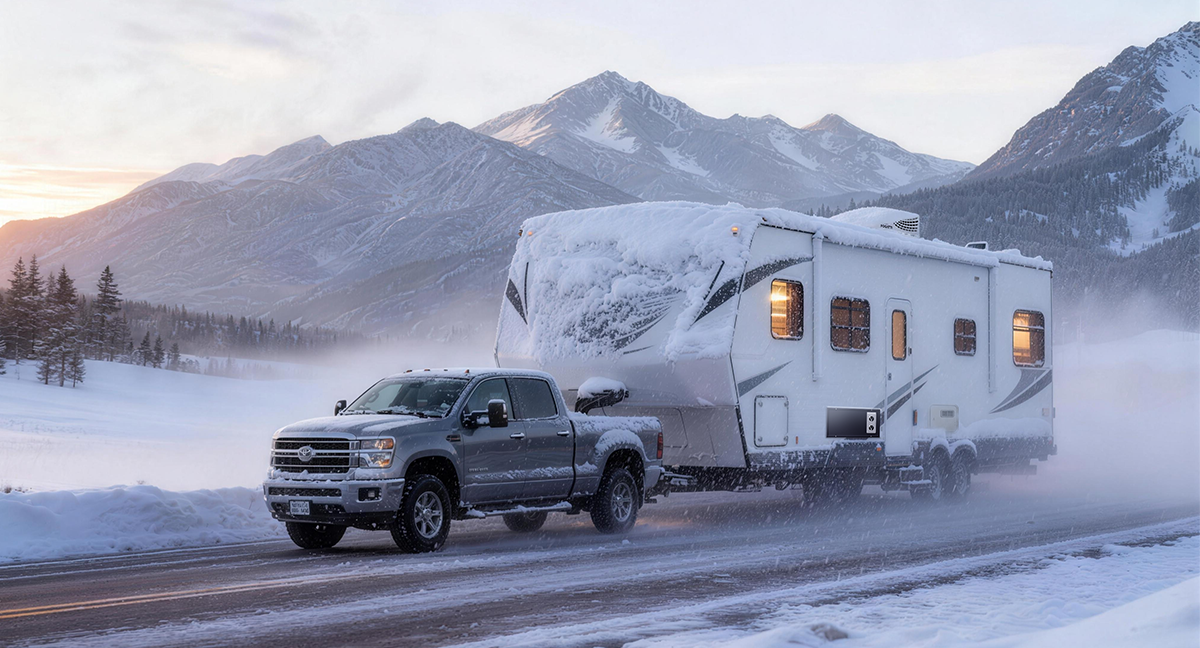
Heat pumps are efficient, but they have hard limits. They begin losing effectiveness below 45°F and generally stop functioning between 36°F and 38°F. If you're camped anywhere that dips into the 30s overnight, a heat pump alone will leave you cold. That's not a knock on the technology; it's physics.
Propane furnaces, on the other hand, work in any temperature. Standard RV furnaces are only 60 to 70% efficient, meaning a significant portion of your propane is vented straight outside. Compare that to a home furnace at roughly 80% efficiency. At approximately one-third of a gallon of propane per hour of operation, those losses add up fast for full-timers in cold climates.
Here's the expert layered strategy that balances comfort, cost, and safety:
- Above 40°F: Run the heat pump. It's electric, efficient, and quiet.
- Below 40°F: Switch to the propane furnace. It delivers reliable heat regardless of outside temperature.
- At hookup sites: Supplement with an electric space heater to minimize propane spend.
There's a critical advantage to propane furnaces that heat pumps simply cannot replicate: ducted heat warms your underbelly compartments. That means your water pipes, holding tanks, and plumbing connections get passive freeze protection every time the furnace runs. A single overnight low in the mid-20s°F can freeze exposed RV pipes, and underbelly plumbing is especially vulnerable.
Skirting your rig is another powerful move. It traps a layer of warmer air around the underbelly, reduces furnace run time, and provides an extra barrier against freezing. It's one of the most cost-effective winter upgrades a full-timer can make.
One more factor boondockers must plan for: battery capacity drops to roughly 80% at 32°F, right when heating loads spike. If you're running a furnace blower off battery power in freezing conditions, your effective runtime is significantly shorter than your summer baseline. Plan your power budget accordingly.
Off-Grid HVAC: Powering Comfort Without Shore Power
Boondocking isn't just a lifestyle choice anymore. Campground booking difficulty jumped from 45.5% of campers experiencing sold-out conditions in 2023 to 56.1% in 2024. For many full-timers, off-grid camping is increasingly a necessity, and your HVAC system needs to work without a pedestal.
12V DC RV air conditioners are the game-changer here. These units use up to 68% less power than traditional rooftop models, making off-grid cooling genuinely viable. Running a standard 120V rooftop AC off solar requires a serious investment: 800W to 1,000W or more in panels, plus a lithium battery bank that can easily run $5,000 or higher. A 12V DC unit dramatically lowers that threshold.
Let's talk real numbers. A 100-watt solar panel produces approximately 30 to 40 amp-hours per day in average sun conditions. Before you buy panels, calculate your total HVAC draw: AC startup surge, furnace blower amps, heat pump wattage. Match those numbers against your battery bank capacity and daily solar harvest. If the math doesn't work, you'll be running a generator or sweating it out.
Inverter-based AC units can save up to $450 per season in energy costs compared to conventional models. For a full-timer, that return on investment compounds year after year.
One often-overlooked factor: altitude affects everything. If you travel the Mountain West, solar panel output decreases with cloud cover at elevation, and generator capacity drops in thinner air. Budget conservatively when you're above 5,000 feet.
The Full-Timer's HVAC Maintenance Schedule
Maintenance for full-timers runs three to four times more frequently than for weekend users. Treat your RV HVAC like a commercial appliance, because that's exactly how hard you're running it.
Monthly:
- Clean AC filters (the single highest-impact task)
- Inspect vent seals around ceiling registers
- Check for duct leaks; even small gaps can silently rob 20 to 40% of your cooling capacity
Pre-Season (Spring):
- Service propane furnace burner and igniter
- Test thermostat calibration
- Inspect underbelly insulation for damage from road debris or rodents
Pre-Season (Fall):
- Clean condenser coils thoroughly
- Flush the condensate drain line
- Test heat pump operation above 45°F before cold weather arrives
Annual:
- Professional coil cleaning
- Refrigerant check (especially if your AC output delta drops below 15°F)
- Inspect all duct tape around the plenum for deterioration and reseal as needed
Smart upgrade tip: Retrofit older rigs with app-controlled thermostats compatible with systems like Lippert OneControl or Jayco JAYCOMMAND. Remote pre-heating and pre-cooling from your phone isn't a luxury; it's a practical tool that reduces energy waste and keeps your rig comfortable before you walk through the door.
Climate Chasing vs. Climate-Proofing: Which Strategy Wins?
Most full-timers follow a "Goldilocks Zone" migration pattern: head north to Montana or Colorado in summer, south to Arizona, Texas, or Florida in winter. This minimizes extreme HVAC demands and keeps energy costs low. It's a proven strategy, and it works.
But here's the counterargument: extreme weather is becoming less predictable, and campground availability is tightening. A fully capable four-season HVAC setup gives you the freedom to go anywhere, anytime, without checking the forecast first. Roughly one-third of U.S. campers now report camping during winter months, driving demand for cold-weather insulation upgrades and heated tank systems.
The practical answer is a hybrid approach. Chase mild climates as your primary strategy to reduce wear and cost. But invest in the dual heat pump and propane furnace system, add a 12V DC AC for off-grid capability, and keep your maintenance schedule tight. That combination gives you the flexibility to handle an unexpected cold snap in the Rockies or an extended boondocking stretch in the desert.
The bottom line: climate chasing reduces HVAC costs. Climate-proofing buys freedom. The right balance depends on your travel style and your budget, but having both options available is always better than being caught unprepared.
Build Your Rig for Every Season
Full-time RV living demands a layered HVAC strategy, not a single system running year-round. Inverter-based AC for summer efficiency. A dual heat pump and propane furnace handoff for winter. A 12V DC or solar-ready AC for boondocking independence. Each layer addresses a specific challenge, and together they cover every climate you'll encounter.
But here's the hidden multiplier: maintenance. A well-maintained system will outperform an upgraded but neglected one every time. Stick to the monthly, pre-season, and annual schedule outlined above, and your equipment will reward you with years of reliable service.
Take a few minutes to audit your current setup against the seasonal checklist in this playbook. Identify the gaps, prioritize the upgrades that match your travel patterns, and build your rig for the life you actually live.
At Fogatti, we've spent over 20 years engineering RV comfort systems trusted by more than 800,000 customers across 80-plus countries. Every product we build is backed by a free 24-month warranty and dedicated phone technical support, because reliable comfort on the road isn't optional. It's the whole point. Whatever season your next mile takes you into, we're here to make sure your rig is ready.