


Why One Water Heater Isn't Enough for Long-Term Boondocking
Picture this: your built-in water heater throws an error code 47 miles down a washboard BLM road. No cell service, no repair shop, and a week left on your stay. What now?
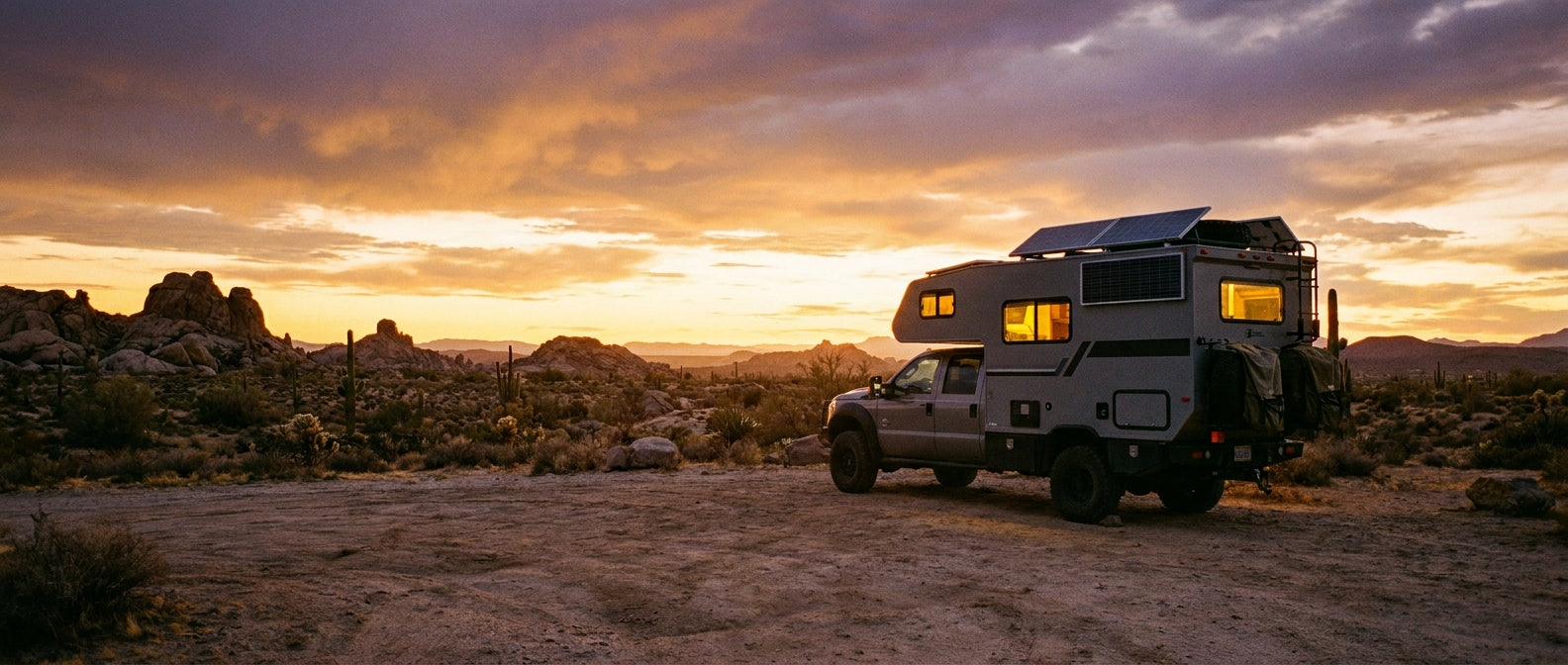
This scenario is increasingly common as boondocking becomes the default camping style for a new generation of RV owners. According to the RVIA's 2025 Go RVing RV Owner Demographic Profile, Millennial and Gen Z owners are actively prioritizing off-grid camping over traditional campgrounds. With 56.1% of campers struggling to find available campsites in 2024, the shift to public lands is accelerating fast.
RV owners now average 30 days per year on the road, a 50% jump from 2021. Trips are longer, more remote, and further from help. The smart approach is to think about your water heater the way a pilot thinks about a backup engine: you hope you never need it, but you absolutely need it to be there.
A redundant hot water system solves the three most common failure scenarios for boondockers: electronics failure, high-altitude shutdown above 4,500 ft, and freeze damage below 39°F ambient. Here's how to build one.
How Built-In RV Tankless Heaters Work, and Where They Fail
Built-in RV tankless water heaters like the Fogatti InstaShower series (6, 8Plus, 8Pro) deliver on-demand hot water by burning propane through a heat exchanger. They're compact, efficient, and eliminate the wait time of a traditional tank. The InstaShower lineup ranges from 42,000 to 55,000 BTU with flow rates of 2.2 to 2.9 GPM, using automatic pulse ignition powered by 12V DC battery. That means two simultaneous dependencies: propane fuel and battery power.
This dual dependency creates the first vulnerability. If your house batteries are low after a cloudy stretch, or if a fuse blows, your hot water goes with it.
The second issue is the minimum flow rate trigger. Tankless heaters need a certain volume of water flowing through them to activate the burner. During a navy shower (turning water on and off to conserve), flow can drop below that threshold. The burner shuts off, you get a blast of cold water, and you end up using more water trying to stabilize the temperature again.
Then there's altitude. Most built-in tankless units struggle or fail entirely above 4,500 feet due to reduced oxygen levels. If you're boondocking in the Rockies, the Sierra Nevada, or high desert country, this is a real problem.
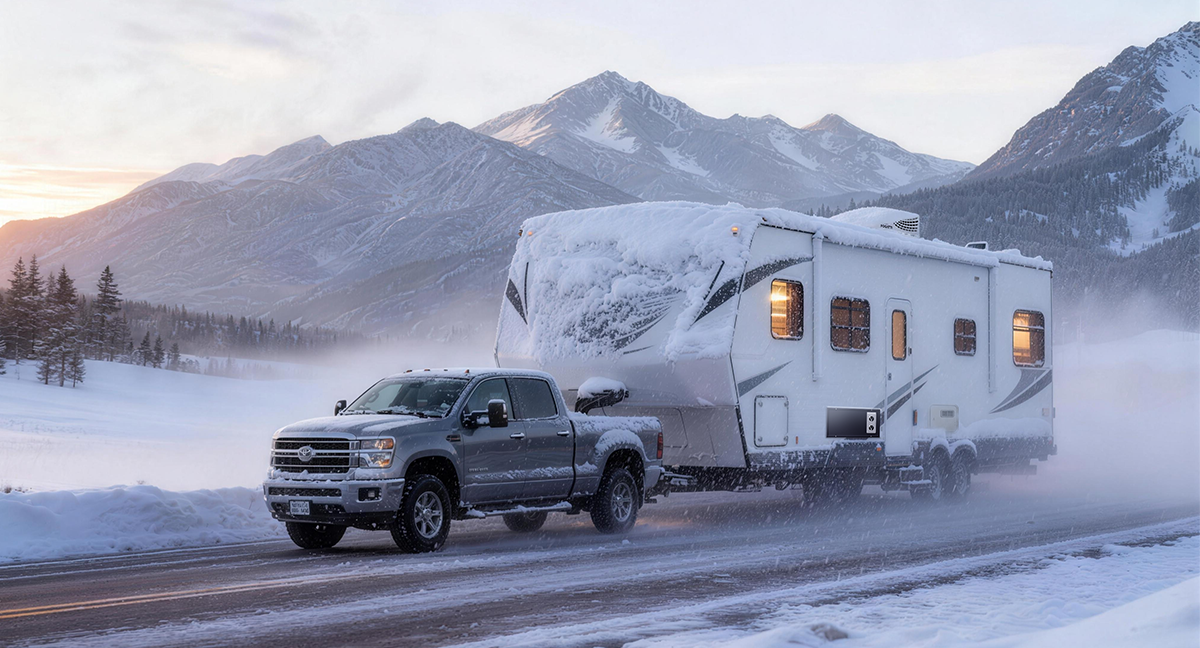
Cold weather adds another layer of risk. Many built-in units have a minimum operating temperature. Some models, like certain Furrion units, reportedly stop functioning around 39°F ambient. For anyone chasing ski-country camping or four-season overlanding, a single heater is a gamble.
Tankless heaters last roughly twice as long as tank-style units. But their more complex electronics (flow sensors, control boards, heat exchangers) mean more potential failure points when you're days from a service center. That's the tradeoff, and it's exactly why redundancy matters.
Choosing Your Portable Backup Unit
Portable tankless water heaters operate independently of your RV's built-in plumbing. Units like the Fogatti InstaShower GO, Eccotemp L5, and Camplux Nano 3 run on propane with battery-powered ignition and can be paired with a simple 12V water pump to pull from any freshwater source. They're self-contained, lightweight, and designed to work outside the rig.
When selecting a portable backup, focus on these criteria: BTU output (higher means faster heating), minimum flow rate (lower is better for water conservation), ignition type (piezo or battery), propane connection compatibility, and cold-weather rating. Match these specs to your typical camping conditions.
One critical system-level tip: run your portable unit on a dedicated small propane tank. A 1 lb canister works for short use, or use an adapter hose to connect to a separate 20 lb cylinder. This keeps the portable heater from competing with your furnace and stove for propane from the main onboard supply. Propane load-balancing is a real skill for long-term boondockers, and it starts with separating your fuel sources.
There's a bonus most people overlook. Using a portable unit for outdoor showering bypasses the gray tank entirely. Two people typically consume 3 to 5 gallons of water per day for showering. If that water drains onto the ground instead of into your gray tank, you can extend your boondocking stay by days. On a 14-day BLM stay, that's a significant advantage.
The financial barrier is low. Portable backup units start under $150. Combined with a built-in tankless heater, a complete dual-system setup runs $350 to $850 total. Camping World and other major RV retailers list Fogatti among the top recommended tankless brands alongside Suburban, Girard, and Dometic, so you're building on a proven foundation.
Parallel vs. Series: Which Plumbing Configuration Is Right for You
When integrating a portable unit into your existing RV plumbing, you have two main options: parallel or series. Each serves a different purpose, and RV forums have debated the tradeoffs for years without a definitive consensus.
Parallel Configuration
In a parallel setup, you tap the portable unit into the cold water inlet and hot water outlet lines using ball valves. Both units can share the load simultaneously, or one can sit as a hot standby while the other runs. The key requirement is backflow prevention: install a check valve on each unit's outlet to prevent hot water from flowing backward into the idle heater. Without this, you risk damaging components or creating unpredictable temperature swings.
Parallel is the better choice for emergency switchover. If your built-in unit fails, close two isolation ball valves on its inlet and outlet, open the valves to the portable unit, and you're back in business. No draining, no reconfiguration, no breaking camp.
Series Configuration
In a series setup, the portable unit pre-heats incoming cold water before it reaches the built-in heater. The built-in unit then brings the water up to final temperature with less work. Field test data from a two-week trial in Arizona showed that a solar preheat loop (a similar concept) reduced propane consumption by 30 to 40%. A portable heater in series achieves a comparable effect, cutting propane demand on the primary unit significantly.
Series is the better choice for propane efficiency during normal operation, but it's slower to reconfigure in an emergency.
The Third Layer: Solar Preheat
For maximum redundancy, consider adding a solar preheat loop: 50 feet of black PEX coiled on the roof. This passively warms incoming water before it hits either heater, reducing propane consumption by that same 30 to 40% range. It's a zero-energy, zero-fuel addition that builds passive redundancy into the entire system.
Both configurations are achievable with standard plumbing fittings and are well-documented across RV forums. Pressure management and backflow prevention are non-negotiable safety steps regardless of which path you choose.
Operating Your Dual System: Scenarios and Protocols
A dual-heater setup only works if you know when and how to use each unit. Here are the three scenarios that matter most.
Scenario 1: Electronics failure mid-trip. Your built-in unit's control board dies. Close the isolation ball valves on the built-in unit's inlet and outlet. Connect the portable unit to your outdoor shower hookup or a garden hose adapter. You'll have hot water again within minutes, without packing up or driving anywhere.
Scenario 2: High-altitude boondocking above 4,500 ft. Your built-in unit may shut down due to reduced oxygen at elevation. All propane appliances are affected by altitude, but a portable unit running on a separate, dedicated propane supply with lower BTU demand can maintain more reliable operation. Keep the portable unit ready as your primary hot water source when camping above the tree line.
Scenario 3: Cold-weather boondocking below 39°F. Switch to the portable unit for active hot water use. Drain and winterize the built-in unit to protect it from freeze damage. When temperatures climb back above the safe threshold, restore the primary system and stow the portable unit.
You'll also want to decide between comfort mode and efficiency mode. Using the portable unit outdoors bypasses the gray tank and conserves tank capacity, extending your stay. Plumbing it into the indoor system gives you full-comfort showers and sink access but fills the gray tank faster. Choose based on how long you plan to stay.
One final propane tip: reserve your main onboard tank for the furnace and cooking. Run the portable water heater off a dedicated 20 lb cylinder. On cold nights, you don't want to discover that hot showers drained the propane your furnace needs.
Build Your Redundant System With Confidence
The three-layer redundancy stack is straightforward: a primary built-in tankless heater (like the Fogatti InstaShower series), a portable backup unit, and an optional solar preheat loop. Together, they cover electronics failure, altitude issues, freeze risk, and propane efficiency in a single, modular system.
The investment makes financial sense, too. Full-time boondocking on BLM land in western states costs roughly $8,000 to $10,000 per year, compared to $12,000 to $15,000 in eastern states with campground fees. A $350 to $850 dual-system setup pays for itself quickly by keeping you off-grid longer and out of paid campgrounds.
Fogatti has served over 800,000 customers across 80+ countries and is a trusted OEM supplier for manufacturers like Thor Industries, Forest River, and Coachmen. Every Fogatti unit comes with a free 24-month warranty and phone technical support to back you up throughout your RV experience.
Ready to get started? Use the Fogatti RV Water Heater Calculator to find the right built-in unit for your rig, then pair it with a portable backup before your next extended trip. With a redundant hot water system onboard, a remote breakdown becomes a minor inconvenience, not a trip-ender.