


Why RV AC Maintenance Is More Critical Than Ever
RV AC repairs cost between $150 and $1,200, and a full unit replacement can run $1,200 to $3,500 when you factor in labor rates of $150 to $250 per hour, according to JB RV Mobile RV Repair. Those numbers sting, especially when most failures are preventable.
The stakes keep climbing. There are now an estimated 11.2 million RV-owning households in the U.S., and average annual usage days have jumped 50%, from 20 days in 2021 to 30 days in 2025, per Mordor Intelligence. That means your rooftop AC is absorbing significantly more seasonal stress than it did just a few years ago.
36% of current RV owners are first-time buyers who may have never popped open a rooftop shroud. This checklist is built for them, and for every seasoned road warrior who wants a reliable refresher. With RV maintenance and storage costs rising roughly 15% since 2024 according to Camp Addict, preventive DIY upkeep is one of the smartest financial moves you can make. The Fogatti InstaCool is precision-engineered to deliver reliable cooling season after season, but only when you give it the care it deserves.
Your Pre-Season Spring Inspection Checklist
Major RV service providers like Lazydays recommend servicing your rooftop AC at least once every 12 months to maintain warranty coverage and catch small issues before they become expensive ones. Spring, before your first trip, is the ideal time. Here is your step-by-step walkthrough.
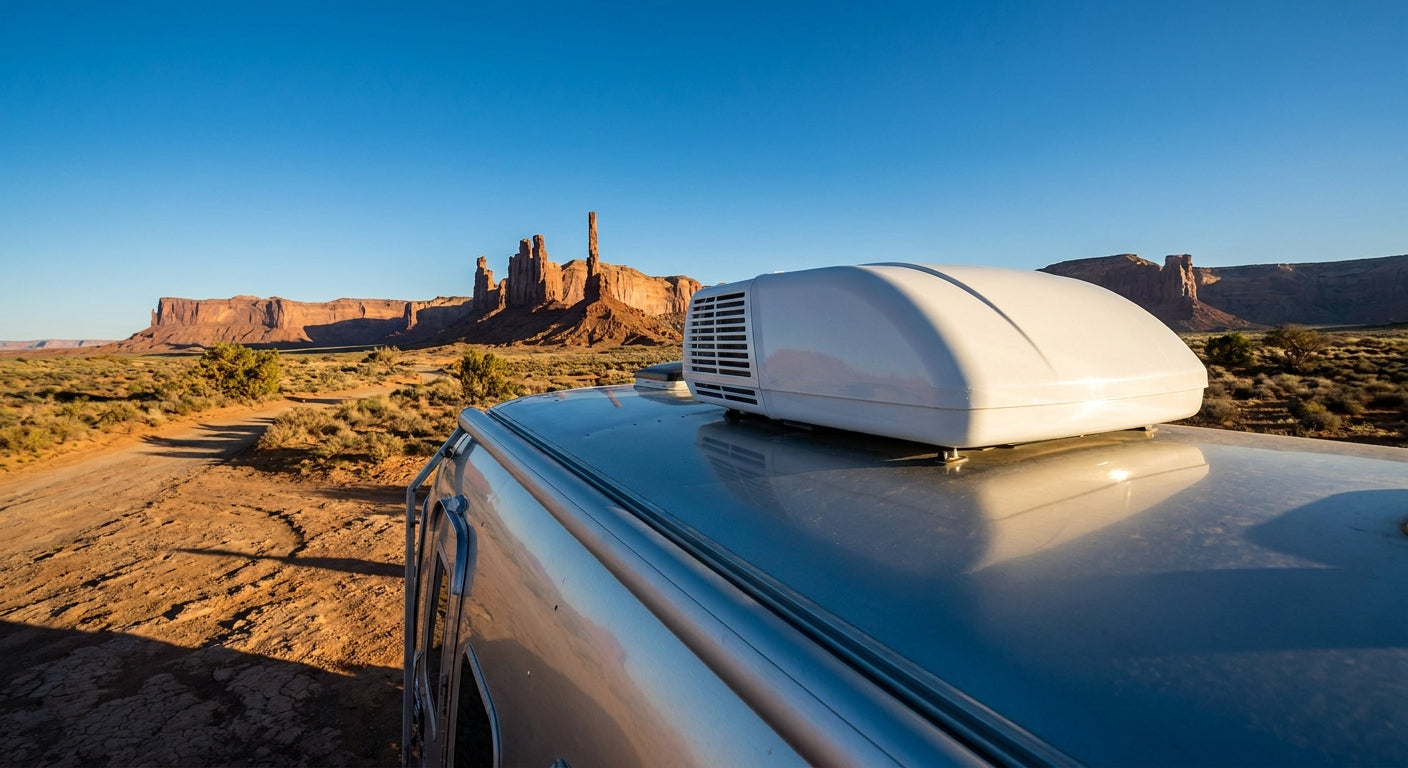
Step 1: Remove and inspect the shroud. The UV-protective plastic shroud is your AC's first line of defense. Pop it off and look for cracks, brittleness, and any signs of pest nests. Wasps, mud daubers, and bees love to set up shop during the off-season. If you camp in high-solar-intensity regions like the Southwest, treat the shroud with a UV-protective plastic treatment every 6 to 12 months, as recommended by RV PRO.
Step 2: Clean both coil sets. Your InstaCool has two sets of coils: condenser coils (outside-facing) and evaporator coils (inside-facing). Both should be cleaned every one to two years depending on travel frequency and environment. Use a quality coil cleaner spray, let it sit per the product directions, and rinse gently. Avoid high-pressure water, which can bend the delicate fins.
Step 3: Check the roof gasket. The foam gasket between the AC unit and the roof should maintain about 50% compression. If it is flattened or cracked, replace it immediately. A compromised gasket is a direct invitation for water intrusion into your ceiling.
Step 4: Torque the mounting bolts. Tighten mounting bolts to approximately 40 to 50 inch-pounds (4.5 to 5.6 Nm). Road vibration loosens them over time, but resist the urge to overtighten. Excessive torque can crack the roof or warp the mounting frame.
Step 5: Inspect wiring connections. Inside the rooftop unit, check all wiring connections for corrosion, fraying, or looseness. Vibration from road travel is relentless, and a loose wire can cause intermittent failures that are difficult to diagnose later.
Step 6: Check capacitors. Capacitors weaken during the off-season and are a common failure point. A bulging or leaking capacitor signals imminent failure. This is borderline DIY territory; if you are comfortable working with electrical components and the unit is fully powered off, you can inspect and replace them. If you are unsure, call a pro.
Monthly In-Season Maintenance Tasks
Dirty or clogged air filters are the single most overlooked maintenance task and the number one cause of RV AC problems, according to Lippert. A restricted filter forces the compressor to work overtime, drives up energy consumption, and can trigger a complete freeze-up of the evaporator coils. Do not let a $0 task cause a $500 repair.
Clean the InstaCool's air filter every 2 to 4 weeks during peak use. Remove the filter from the ceiling assembly, rinse it with warm water, and allow it to dry completely before reinstalling. A damp filter reintroduced to the unit promotes the exact mold growth you are trying to prevent.
Check and clear the condensate drain line monthly. A clogged drain causes internal moisture buildup and promotes mold growth inside your RV ceiling. Flush the line with a diluted vinegar solution to keep it clear and odor-free.
Inspect the shroud exterior for new cracks or storm damage, especially after rough travel days or severe weather. UV damage is cumulative, and small cracks grow fast.
Listen for unusual sounds. Rattling often indicates loose mounting hardware, which a quick torque check can fix. Grinding or squealing suggests fan motor or bearing issues. If you hear either, escalate to a professional before the problem compounds.
For full-timers and remote workers running the AC 8 to 12 hours a day (22% of campers reported working remotely from campsites in 2024), tighten these intervals. Clean the filter every 2 weeks and check the condensate drain every 3 weeks. Your unit is working harder, and your maintenance schedule should match.
The Voltage Check Most RV Owners Skip
Here is a maintenance step that almost no checklist covers, and it may be the most important one. Campground voltage frequently drops to 105V during hot summer weekends when every rig on the loop is running AC at full blast. This is a documented and underreported cause of compressor damage, as noted by Good Sam RV ProCare.
The InstaCool and most 13,500 BTU units draw 12 to 16 amps at 120V AC during operation. When voltage drops below 108V, the compressor may not engage at all. Sustained low voltage does not just prevent cooling; it overheats the compressor and can cause permanent damage.
The fix is simple. Use a multimeter or a plug-in voltage monitor (such as a Progressive Industries EMS) before running the AC at any new campground hookup. If the reading comes in below 108V, do not run the compressor. Use fan-only mode, set up shade, or wait until evening when grid load typically drops.
If you boondock or run a generator, consider adding a soft-start device. A soft starter reduces startup current draw by up to 65 to 75%, according to TechnoRV. That means your InstaCool can start on a 2,000 to 2,200W inverter generator instead of requiring 3,000W or more, extending compressor life and unlocking off-grid cooling that was not practical before.
Think of voltage monitoring as a two-minute habit that can prevent a $1,000-plus compressor repair. It is the cheapest insurance you will ever carry.
DIY vs. Call a Pro: A Quick Decision Guide
Not every task belongs in your hands, and knowing the line is part of being a responsible RV owner. Here is a straightforward breakdown.
Always DIY:
- Filter cleaning and rinsing
- Condensate drain flushing
- Shroud inspection and UV treatment
DIY-friendly with the right tools:
- Coil cleaning (annual, with proper coil cleaner spray)
- Mounting bolt torque check (with a torque wrench)
Borderline (DIY only if experienced):
- Capacitor inspection and replacement. Only attempt this if you are comfortable with electrical work and the unit is fully powered off. Otherwise, call a technician.
Always call a professional:
- Refrigerant issues. RV rooftop AC units are sealed systems not designed for field recharging. Low refrigerant almost always means a leak that requires professional diagnosis or full unit replacement.
- Compressor failure or motor replacement.
Before attempting any repair you are unsure about, remember that Fogatti offers a free 24-month warranty and phone technical support throughout your ownership experience. One call can save you time, money, and frustration on the road.
End-of-Season Storage Prep
Run the AC for 15 to 20 minutes on fan-only mode before you button up for winter. This dries out the evaporator coils and condensate pan, preventing mold and mildew from developing during months of storage.
Clean the filter one final time. A dirty filter sitting in a sealed unit all winter is a breeding ground for bacteria and odors you do not want greeting you in spring.
Inspect the shroud for cracks. UV damage is cumulative, and even hairline cracks worsen through winter freeze-thaw cycles. Replace it now rather than discover a shattered shroud in April.
Cover the rooftop unit with a breathable RV AC cover to block debris, moisture, and pests during storage. Seal interior ceiling vents loosely with a breathable cover as well to prevent pest entry and air loss from below.
Finally, note in your calendar to schedule a spring inspection before the first trip of next season. Annual service every 12 months is the minimum recommended interval. Your future self will thank you.
Keep Your InstaCool Running Strong All Summer
Here is the full system in brief: a thorough pre-season spring inspection, monthly in-season tasks (filters, drains, sounds), a voltage monitoring habit at every hookup, and proper end-of-season storage prep.
The return on investment is hard to argue with. About two hours of DIY maintenance per season can prevent $300 to $1,200 in avoidable repairs and push your unit's service life toward its full 8 to 15 year rating, as noted by OutdoorCarry. Modern units like the InstaCool cool 30 to 40% more efficiently than models from just five years ago, according to HeatGear360. That efficiency only holds when the unit is properly maintained.
Ready to upgrade your comfort on the road? Explore the Fogatti InstaCool product page to see what precision-engineered RV cooling looks like. Our phone technical support team is standing by if you have questions. And if you want to dial in other comfort systems, try our RV Water Heater Calculator to find the right tankless solution for your rig.
Adventure is better when your rig is ready. Keep the InstaCool dialed in and focus on the miles ahead.
Sources
- JB RV Mobile RV Repair – How Much Does RV A/C Repair Cost?
- ConsumerAffairs – RV Industry Statistics 2026
- Mordor Intelligence – North America RV Market Report
- GM Insights – Recreational Vehicle Market Report
- Camp Addict – RV Industry Statistics 2026
- Lazydays – RV Rooftop AC Maintenance Service Guide
- RV PRO – Beat the Heat: RV AC Installation & Maintenance Guide
- Lippert – 8 Common RV Air Conditioner Problems
- Good Sam RV ProCare – RV AC Problems: Fixes & Troubleshooting
- TechnoRV – RV Soft Starters for AC Units: Essential Guide
- OutdoorCarry – How Long Does an RV AC Last?
- HeatGear360 – RV Air Conditioners Rooftop Ultimate Guide