



By: Johnny Walker
Why Your RV Type Is the Most Important Factor Nobody Talks About
Here's a truth most RV buyers learn the hard way: you can't shop for an AC unit or water heater without first understanding what your RV class allows. Your rig's electrical service capacity is the single biggest constraint on which systems are even feasible, and it's rarely discussed in generic buying guides.
The divide comes down to amperage. A 30-amp RV system delivers a maximum of 3,600 watts, while a 50-amp system provides up to 12,000 watts. That's a 3.3x difference that eliminates entire product categories for the majority of buyers. And "majority" is the right word: according to the RV Industry Association, 342,220 RVs shipped in 2025, with towables accounting for over 300,000 of those units. Most buyers are working within the most restrictive electrical constraints.
This guide delivers what no generic article does: a structured, RV-type-specific breakdown of HVAC and water heating recommendations for travel trailers, Class A motorhomes, and Class C motorhomes.
Travel Trailers: Working Within the 30-Amp Constraint
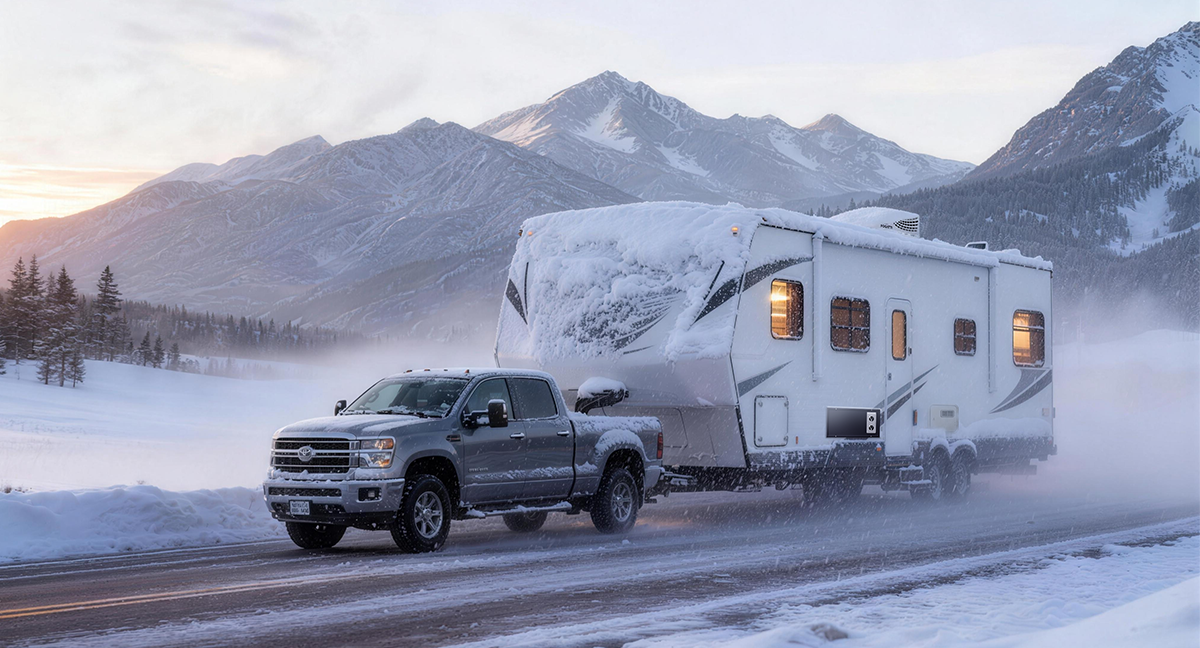
Travel trailers are towable, versatile, and the most popular RV type on the market. They're also the most electrically constrained. Running on 30-amp service (3,600 watts max), they demand careful system planning that motorhome owners rarely have to think about.
Insulation is the first variable to understand. Travel trailers typically have thinner walls and less insulation than motorhomes, which means they lose heat faster and require more BTUs per square foot to stay comfortable. According to SolarTechOnline, well-insulated RVs can reduce heating and cooling loads by 30 to 40%. If your trailer has minimal insulation, size up accordingly.
HVAC Sizing
A typical 20-foot travel trailer needs a 13,500 BTU rooftop AC unit and a 20,000 to 25,000 BTU propane furnace. Here's the critical detail most guides skip: on a 30-amp system, running an air conditioner and an electric water heater simultaneously is physically impossible. The AC alone draws 1,200 to 1,800 watts, leaving almost no headroom for other high-draw appliances.
For boondockers who can't rely on shore power, propane-only furnaces remain the go-to solution. DC-powered AC units (12V/24V/48V) are also emerging as travel-trailer-specific options for off-grid campers, though they remain a niche market.
Water Heater Recommendation
This is where tankless propane water heaters truly shine. Systems like Fogatti's high-BTU on-demand units draw zero electrical watts during the heating cycle and eliminate the standby energy loss that comes with keeping a tank of water hot around the clock. For a 30-amp rig, that electrical neutrality is a game-changer.
One honest note: travel trailer plumbing layouts can sometimes cause low-flow activation issues and brief cold bursts, particularly during tasks like dishwashing. Proper flow management and correct unit sizing solve this for most owners. It's also worth noting that many leading RV manufacturers now include tankless water heaters as the standard option in top-selling campers, validating the propane-tankless direction for this segment.
Class A Motorhomes: Maximum Power, Maximum Comfort Expectations
Class A motorhomes are the flagships of the RV world. Ranging from 30 to 45 feet, they typically come with 50-amp service (up to 12,000 watts), dual 15,000 BTU rooftop AC units, and often basement HVAC systems featuring residential-style heat pumps for climate control redundancy. If you're buying a Class A, comfort expectations are high and the systems need to match.
BTU Scaling Reality
Size matters enormously in this class. A 40-foot Class A may use 50% more energy for climate control than a 30-foot unit. Furnaces in this category range from 35,000 to 50,000 BTU, sometimes running as dual units to cover the larger floor plan. In colder climates, you may need 45 to 60 BTUs per square foot, according to Mortons on the Move.
Water Heater Recommendation
Class A full-timers benefit most from high-BTU tankless propane systems (up to 66,000 BTU) that deliver endless hot water on demand. With 22% of campers now working remotely from their rigs, consistent daily comfort isn't a luxury; it's a requirement.
Traditional 6 to 10 gallon tank water heaters offer propane plus 120V shore power flexibility, which suits weekend Class A users at full-hookup campgrounds. For full-timers, however, tanks simply can't keep up with sustained demand.
Looking Ahead: Electrification
Thor Industries and other major OEMs are developing hybrid and battery-electric Class A coaches that will replace propane furnaces with heat pump systems. If you're buying new, this is a forward-looking consideration worth tracking. Class A owners also represent the segment most likely to consume 60+ kWh per day, making energy-efficient appliance choices (such as on-demand water heating) a meaningful cost and sustainability factor.
Class C Motorhomes: The Overlooked Middle Ground
Class C motorhomes, built on a truck or van chassis and ranging from 20 to 35 feet, occupy a unique space. Electrical service varies widely: smaller units run on 30-amp, while larger Super C models step up to 50-amp. That makes system selection highly size-dependent.
The Cab Area Heat Load
Here's a challenge almost no competitor content addresses: the cab area. That large windshield and those driver and passenger windows create a significant additional heat load that standard rooftop AC sizing formulas don't account for. Add 10 to 15% to your BTU estimate to compensate.
Furnace Sizing
Smaller Class Cs (20 to 25 feet) align closer to travel trailer needs at 25,000 to 30,000 BTU, while larger Super C models approach Class A requirements. Furnace blower wattage in this class ranges from 84 to 158 watts per hour, which matters for battery management during boondocking. Keep propane costs in mind as well: a 30,000 BTU furnace running at roughly 65% efficiency consumes about one gallon of propane every three hours of continuous operation.
Water Heater Recommendation
Class C owners on 30-amp service should follow the travel trailer propane-tankless logic. Those with 50-amp service gain the flexibility to consider a dual-fuel tank heater (propane plus 120V) for campground versatility.
With average annual RV usage jumping from 20 days in 2021 to 30 days in 2025 according to Consumer Affairs, Class C owners spending more time on the road need systems sized for sustained use, not just weekend getaways.
Quick-Reference: Matching Your RV Type to the Right System
Here's the scannable summary:
- Travel Trailer: 30-amp service. Propane furnace (20,000 to 25,000 BTU). Propane tankless water heater. DC-powered AC for boondocking.
- Class A Motorhome: 50-amp service. Dual 15,000 BTU AC units or basement heat pump. High-BTU tankless water heater (up to 66,000 BTU) for full-timers, or dual-fuel tank heater for weekend use.
- Class C Motorhome: Size-dependent (match to 30-amp or 50-amp guidance above). Add 10 to 15% BTU buffer for cab heat load. Propane tankless or dual-fuel tank based on electrical service.
The insulation variable applies everywhere: a well-insulated RV of any class can downsize its HVAC system by 30 to 40% without sacrificing comfort. Always factor wall insulation quality into your BTU sizing.
Not sure which system fits your rig? Fogatti's RV Water Heater Calculator is built to match your specific RV type and usage pattern to the right product. It's the kind of tool you'd expect from a brand trusted as an OEM supplier by Thor Industries, Forest River, and Coachmen. These manufacturers already rely on the same tankless systems we recommend here.
Make the Right Call Before You Buy
Your RV type, specifically its electrical service capacity and insulation level, is the primary filter for every HVAC and water heating decision you'll make. Get this right and everything else falls into place. Get it wrong and you're looking at costly upgrades down the road.
Use Fogatti's RV Water Heater Calculator to confirm your sizing, and don't hesitate to reach out to our free phone technical support team before you buy. With over 800,000 customers across 80+ countries and more than 20 years of engineering RV comfort solutions, we've seen every setup and every challenge.
With 9.6 million U.S. households planning to purchase an RV in the next five years, understanding these constraints before you buy saves real money and real frustration.
The right system means home-like comfort wherever the road takes you. Backed by a free 24-month warranty, free shipping within one business day, and a 30-day return policy, that comfort comes with a promise you can count on.
Sources
- Clemson RV Park — 30 Amp vs 50 Amp RV: What You Really Need to Know
- RVIA — RV Shipments End 2025 at 342,220 Units
- SolarTechOnline — How Much Electricity Does an RV Use?
- Camping World Blog — Tankless Water Heater Pros and Cons for RV Living
- Furrion — Types of RV Air Conditioners Explained
- Mortons on the Move — The Beginner's Guide to RV Furnaces
- Mordor Intelligence — North America RV Market Size, Growth & Outlook, 2031
- The RV Geeks — RV Tankless Water Heater vs Traditional
- RV Parenting — How Many Watts Does an RV Furnace Use?
- Consumer Affairs — RV Industry Statistics 2026
- RVIA — RV Market Expected to Trend Upward in 2026