


Why Your RV's Stock Water Heater Isn't Enough for a Family
Picture this: you're parked at a gorgeous campsite after a long day of hiking, and your family of four is lined up for showers. The first person gets eight minutes of hot water. Everyone else gets ice cold. A standard 6-gallon RV tank heater delivers only 5 to 8 minutes of hot water before it needs 30 or more minutes to recover. That's simply not enough for a family.
Tank heaters store 6 to 10 gallons. Tankless units deliver 2 to 3 GPM continuously with zero recovery wait. With the RVIA projecting 320,400 to 353,500 RV shipments in 2025 and up to 366,100 in 2026, hundreds of thousands of families are hitting the road each year and running into this exact problem.
According to industry research, 37% of owners experience sizing-related issues within the first year of installation. Undersizing is the number one mistake. To avoid it, you need to understand two key metrics: BTU (heat output) and GPM (flow rate). This guide walks you through a step-by-step BTU/GPM calculator approach tailored to your family size and RV length.
The BTU/GPM Formula Explained in Plain Language
Here's the core formula every RV owner should know:
BTU/h ≈ 500 × GPM × Temperature Rise (°F)
GPM is the total gallons per minute of hot water you need flowing at once. Temperature rise is the difference between your desired outlet temperature and the cold water inlet temperature. If you want 120°F water and your inlet is 55°F, your temperature rise is 65°F.
RV-specific tankless water heaters typically operate in the 40,000 to 68,000 BTU range, as noted by Evans Engineering. That's far below residential whole-house units, which run 150,000 to 199,000 BTU. This distinction matters because general sizing guides often reference residential numbers that don't apply to your rig.
One critical detail: GPM output drops as temperature rise increases. Always size for the coldest realistic inlet water temperature you'll encounter, not the average. This is how professionals size systems.
Worked example: a family wanting 2.0 GPM at a 65°F rise needs 500 × 2.0 × 65 = 65,000 BTU/h.
One more rule to remember: the 80% rule. If a heater runs above 80% of its maximum output during normal use, expect temperature fluctuations and accelerated component wear. Always build in a buffer.
Step-by-Step BTU & GPM Calculator for Your Family Size
Think of this as a fill-in-the-blank worksheet to complete before you purchase. Grab a pen or open your notes app.
Step 1: Count your simultaneous fixtures. Only add fixtures that will run at the same time. An RV shower pulls 1.5 to 2.5 GPM. A kitchen faucet runs about 1.0 GPM. An outdoor rinse station draws 0.5 to 1.0 GPM. If your family runs the shower and kitchen faucet simultaneously, your total GPM demand is roughly 2.5 to 3.5 GPM.
Step 2: Determine your temperature rise. Identify the typical cold water inlet temperature for your travel region and subtract it from your 120°F target. Camping in the Pacific Northwest in spring? Expect inlet temps around 45°F, giving you a 75°F rise. Desert Southwest in summer? Inlet temps near 70°F mean only a 50°F rise.
Step 3: Plug into the formula. Total GPM × 500 × Temperature Rise = your minimum BTU requirement.
Step 4: Apply the 80% rule buffer. Divide your calculated BTU by 0.80 to get the recommended unit BTU rating. If you calculated 52,000 BTU, your target unit should be rated at least 65,000 BTU.
Step 5: Cross-check against the family-size table in the next section.
Want to skip the manual math? Fogatti's RV Water Heater Calculator runs this exact process digitally and delivers a product recommendation in seconds.
BTU and GPM Recommendations by Family Size and RV Length
Here's a sizing matrix combining family size and RV length for a complete picture no matter your setup:
- Solo/Couple in RV under 25 ft: 40,000 to 50,000 BTU, 1.5 to 2.5 GPM. Suitable for sequential use (one fixture at a time).
- Family of 2 to 4 in 25 to 40 ft RV: 55,000 to 65,000 BTU, 2.5 to 3.5 GPM. Supports simultaneous shower and kitchen use.
- Family of 4+ in RV over 40 ft: 60,000 to 68,000 BTU, 3.5 to 3.9 GPM. Tankless is mandatory for full-time living at this scale.
- Small travel trailers (16 to 22 ft): 40,000 to 48,000 BTU units are sufficient for weekend trips with 1 to 2 people.
- Larger RVs (30+ ft) with growing families: 60,000+ BTU systems are the minimum for reliable, consistent performance.
Here's a distinction many guides miss: full-time RVers vs. weekend campers have dramatically different needs. A family of four full-timing in a 40-ft fifth wheel uses hot water for daily showers, cooking, and cleaning. That's a completely different demand profile than the same family on a three-day trip. If you're full-timing, always size for the higher end of the BTU range.
Altitude and Cold Climate Adjustments Every RV Family Must Know
If you camp in the mountains or travel during winter, the numbers above aren't the whole story.
Altitude factor: Propane tankless heaters lose approximately 4% of BTU output for every 1,000 feet above 4,000 ft elevation, according to RecPro. That adds up fast. A 65,000 BTU unit at 8,000 ft elevation delivers roughly 52,000 effective BTU. For a family of four, that could mean the difference between comfortable showers and lukewarm disappointment.
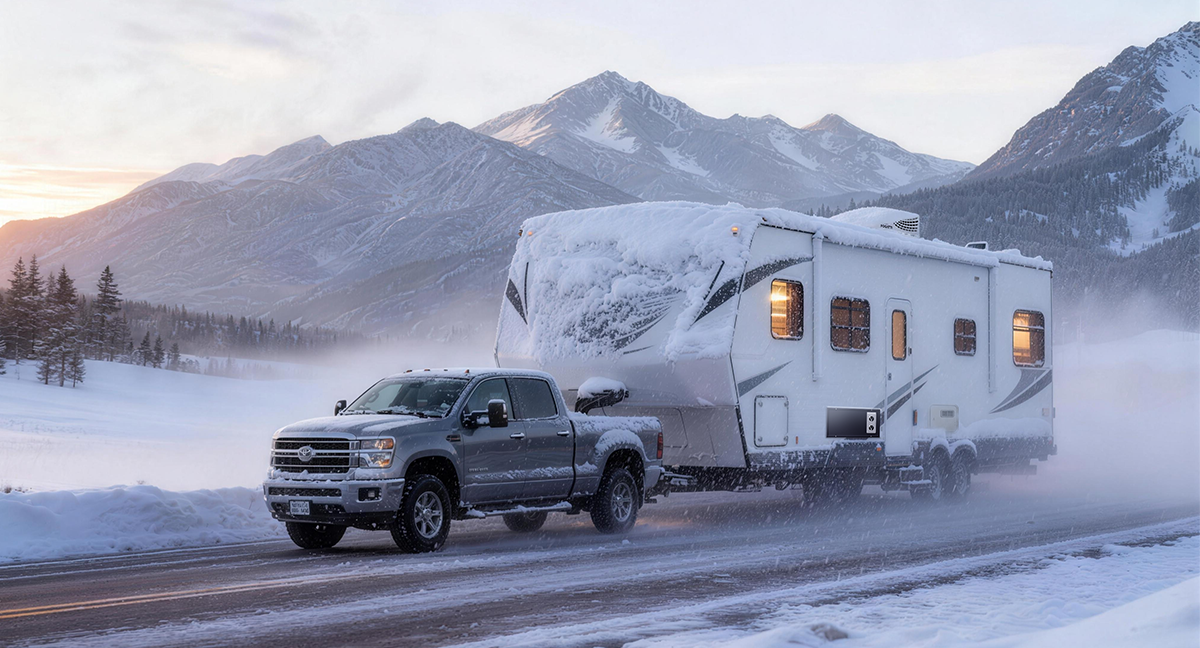
Cold climate factor: Below 0°F, propane BTU capacity can drop by 50% or more, as documented by NW Adventure Rentals. Cold climates can also reduce actual GPM capacity by 20 to 40% compared to manufacturer-rated maximums. Always size for worst-case conditions.
Propane tank compatibility: A family running a 65,000 BTU unit should confirm their propane tank (20-lb, 30-lb, or 100-lb) can sustain peak demand. Smaller tanks may struggle to deliver adequate pressure during extended use in cold weather.
Our recommendation: if your family regularly camps above 5,000 ft or in sub-freezing temperatures, size up by one BTU tier. It's always better to have headroom than to be caught short.
Tank vs. Tankless: A Data-Driven Decision for Your Family
Let's settle this with data, not opinions.
Tank heaters store 6 to 10 gallons and deliver 5 to 8 minutes of hot water per fill. They're acceptable for solo travelers or couples on short trips. Beyond that, the recovery time becomes a real bottleneck.
Tankless heaters deliver continuous on-demand hot water at 2 to 3 GPM. For families of three or more, they're the only practical solution.
The energy savings are significant. The U.S. Department of Energy confirms that tankless water heaters save 24 to 34% energy for low-usage households and 8 to 14% for high-usage households. A NatureGuests analysis found that tankless RV water heaters deliver approximately 30% propane savings compared to tank systems that maintain standby heat around the clock.
For a family of three showering daily, a tank heater consumes roughly 2 gallons (8.5 lbs) of propane per week, according to RV Blogger. A tankless unit reduces that meaningfully by firing only when hot water is actually demanded.
The decision rule is simple: family of 3 or more, full-time RV living, or an RV over 30 ft? Tankless is the clear choice, not a preference.
Choosing the Right Fogatti Tankless Water Heater for Your Family
All the math above points to one thing: you need a tankless unit built specifically for the RV BTU range. Fogatti's lineup includes units delivering up to 66,000 BTU, covering every family size and RV configuration in the chart above.
Don't want to crunch numbers? Fogatti's RV Water Heater Calculator applies the BTU/GPM formula for you and matches you with the right unit instantly. We recommend using the sizing worksheet from this article alongside the calculator as a double-check.
There's a reason major RV manufacturers trust Fogatti. We're an OEM supplier to Thor Industries, Forest River, and Coachmen. The same engineering that goes into factory-installed units is available directly to you. Founded in 2003, Fogatti has served over 800,000 customers across 80+ countries.
Every unit comes with a free 24-month warranty, dedicated phone technical support, and fast free shipping within 1 business day. If you're torn between two BTU tiers, our 30-day return and refund policy makes it a risk-free decision.
Size It Right Before Your Next Adventure
Here's your three-step sizing recap:
- Calculate your total GPM demand based on simultaneous fixture use.
- Determine the temperature rise for your travel region using the coldest realistic inlet temperature.
- Apply the BTU formula (500 × GPM × Temperature Rise) and divide by 0.80 for the recommended unit rating.
The wrong size means cold showers mid-trip. The right size means home-like comfort at every campsite, trailhead, and boondocking spot you'll ever visit.
Don't forget: altitude and cold climate adjustments can shift your BTU requirement by 20 to 50%. If you camp in the mountains or travel through winter, those adjustments aren't optional.
Ready to lock in your family's perfect match? Use Fogatti's RV Water Heater Calculator to confirm your exact BTU and GPM needs before your next purchase. When the hot water never runs out, the adventure never has to stop.
Sources
- Sizing a New Water Heater | U.S. Department of Energy
- RV Industry Market Update, Fall 2025 | BISHS (citing RVIA RoadSigns forecast)
- Best Tankless Water Heater for RVs, Camping & Small Spaces (2026 Buyer's Guide) | Evans Engineering
- Calculating RV Propane Usage | NW Adventure Rentals
- Best Water Heater for RV: Complete Guide | NatureGuests
- How Much Propane Does an RV Water Heater Use? | RV Blogger