


You Went Tankless to Escape Cold Showers — So Why Are You Still Getting Them?
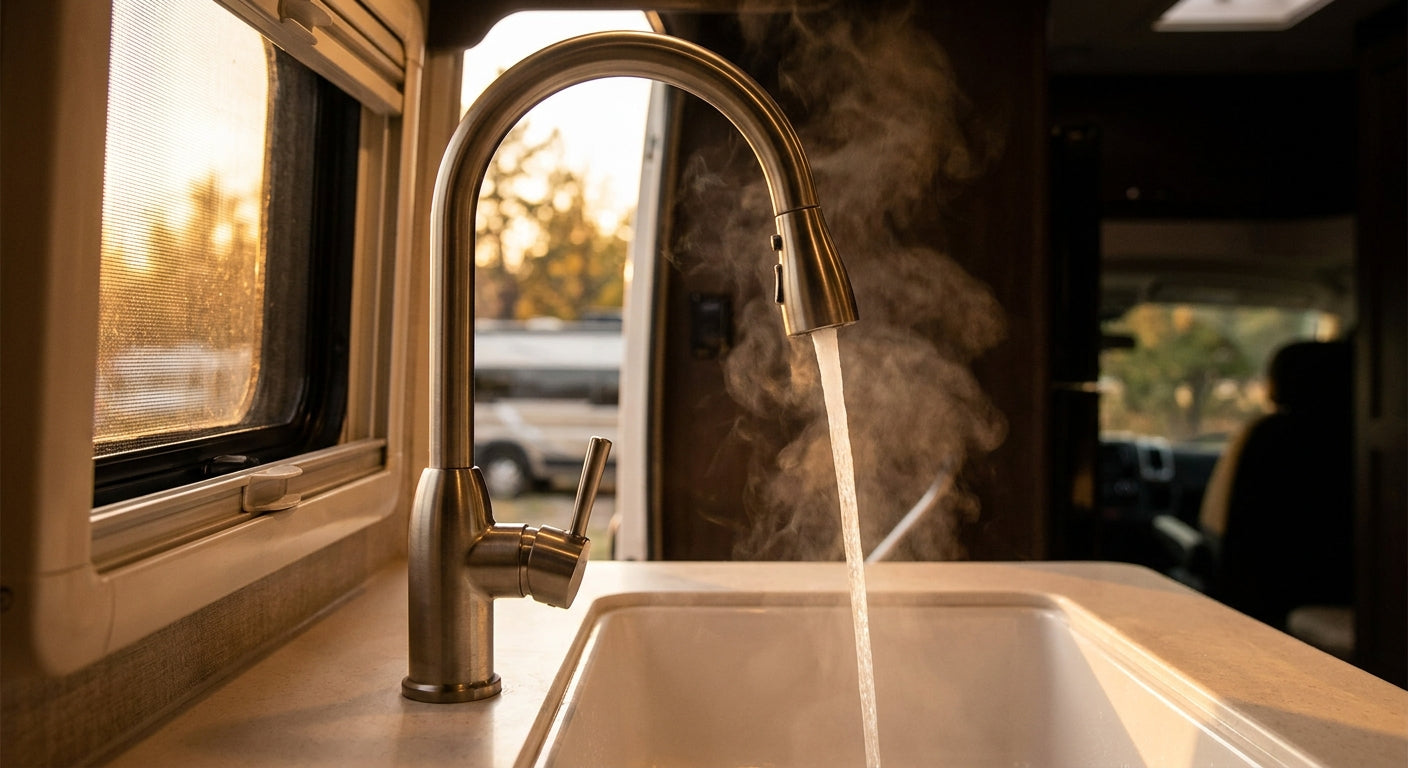
You made the switch. You pulled out that old 6-gallon tank heater, installed a tankless unit, and expected endless hot water on demand. Then, mid-shower, a blast of cold water hit you square in the back. Sound familiar?
That jarring cold burst has a name: the cold water sandwich effect. It is the single most common complaint about standard tankless RV water heaters, and it catches a lot of owners off guard.
This article is not about tank versus tankless. That debate is settled. What we are breaking down here is the more specific and more useful question: standard tankless versus mixing-tank tankless. What does that buffer tank actually do mechanically? And who genuinely needs one?
What the Cold Water Sandwich Effect Actually Is (And Why Standard Tankless Units Cause It)
Here is the physics. When you turn off the hot water tap on a standard tankless unit, the burner shuts down. A small volume of water remains sitting inside the heat exchanger, cooling rapidly. When you turn the tap back on, that cold slug gets pushed through the line first, hitting your fixture before the burner has time to reignite and bring the new flow up to temperature.
The result is a brief but unmistakable blast of cold water sandwiched between two stretches of hot. It typically lasts only a few seconds, but when you are standing in a 30-inch RV shower stall, those seconds feel long.
Standard tankless heaters also require a minimum flow rate (typically 20 to 45 PSI of consistent pressure) to activate the burner. Drop below that threshold and the unit may not fire at all. Low-flow activities like hand-washing and dish rinsing are prime offenders. The burner either modulates aggressively or shuts off entirely, producing lukewarm or cold output.
If you practice navy showering to conserve water (turning the flow on and off repeatedly), the problem compounds. Each restart triggers a fresh ignition cycle and a brand-new cold sandwich.
Over time, mineral and scale buildup inside the heat exchanger makes things worse. Deposits restrict water flow and reduce heat transfer efficiency, amplifying temperature swings. Annual descaling is recommended, but even with maintenance, the fundamental cold-sandwich physics remain.
What a Mixing Tank Actually Does: The Physics of the Buffer
A mixing tank is an integrated buffer vessel positioned downstream of the heat exchanger. This is not the same thing as a thermostatic mixing valve, which is a separate anti-scald device that blends hot and cold supply lines. A mixing tank is a small reservoir built into the water heater itself.
Here is how it works. The tank holds a volume of already-heated water. As the heat exchanger produces output (whether perfectly heated or temporarily too hot or too cold), that output blends with the stored water in the buffer before reaching your fixture. The result is a smoothed, consistent temperature at the tap.
The cold water sandwich? The buffer absorbs it. When the unit restarts and pushes that cold slug out of the heat exchanger, the reservoir's stored hot water dilutes it. Your showerhead never feels the difference.
At low flow rates, the benefit is equally significant. Even when the burner modulates aggressively or cycles on and off, the reservoir maintains a stable thermal mass that keeps output temperature consistent.
There is also a safety benefit. If the heat exchanger momentarily produces superheated water, the mixing tank tempers it before it reaches the showerhead, reducing scald risk.
This is not proprietary or experimental technology. The Truma AquaGo uses a built-in temperature-stabilizing mixing vessel. Furrion's Vortex system uses a functionally identical approach. Mixing-tank buffering is an industry-recognized engineering solution used across premium RV water heaters.
Standard Tankless vs. Mixing-Tank Tankless: Side-by-Side Comparison
Here is how the two types stack up across the dimensions that matter most on the road:
- Temperature Consistency: Standard tankless units fluctuate noticeably at low draw rates. Mixing-tank models maintain stable output. The Fogatti InstaShower 9 Pro, for example, holds a consistent range of 95°F to 123°F, virtually eliminating cold-water shock at startup.
- Low-Flow Performance: Standard units may not fire at all below the activation threshold. A mixing-tank model's reservoir provides hot water even when the burner is modulating or cycling, covering gaps in burner output.
- Navy Shower Compatibility: Standard tankless heaters penalize water-conservation behavior with repeated cold sandwiches. A mixing-tank buffer absorbs restart cold slugs, making on-off-on showering practical.
- Altitude Performance: High-altitude camping above 7,000 feet reduces combustion efficiency, worsening standard tankless instability. Mixing-tank models with staged combustion (like the InstaShower 9 Pro, rated to 9,800 feet) compensate for combustion variability at elevation.
- Price: Mixing-tank premium models typically cost $60 to $162 more than mid-tier standard tankless options. For full-timers and boondockers who use hot water dozens of times daily, that is a strong comfort-per-dollar calculation.
Who Should Choose a Mixing-Tank Model?
Full-time RVers and long-term travelers benefit the most. All-day repeated short draws (dish rinsing, hand-washing, quick rinse-offs) are exactly the scenario where a mixing-tank model outperforms a standard tankless unit.
Boondockers and off-grid campers should pay close attention. Roughly 20% of RV owners boondock, and propane efficiency is critical when running on a 30-lb tank. The buffer reduces unnecessary ignition cycles on short draws, saving propane while keeping water temperature stable.
High-altitude campers in the Rockies, Sierra Nevada, or desert plateaus above 7,000 feet face compounded combustion variability. A mixing tank paired with staged combustion addresses that directly.
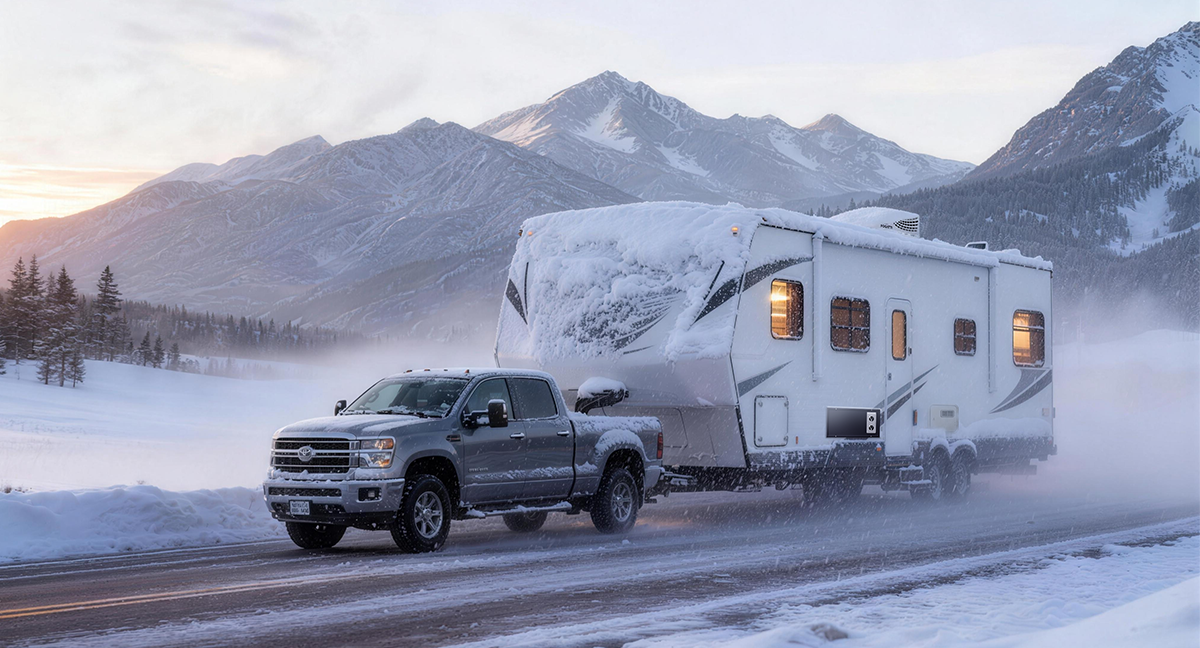
Cold-weather and three-season campers will notice the biggest difference when inlet water temperatures drop near freezing. Cold incoming water dramatically worsens standard tankless fluctuations; the thermal buffer is most valuable precisely when conditions are harshest.
Families running multiple fixtures simultaneously benefit from the InstaShower 9 Pro's 3.6 GPM output with mixing tank, which prevents temperature spikes during high-draw scenarios.
One practical note: the mixing tank adds a small water volume that must be fully evacuated during winterization. It is a minor step, but worth knowing before your first freeze.
Who Can Stick With a Standard Tankless Model?
Weekend and occasional campers who take single, uninterrupted showers and rarely run multiple low-flow fixtures at once will do just fine with a standard tankless unit.
RVers on a tighter budget who camp primarily at full-hookup sites with consistent water pressure will find the activation threshold less of an issue. Stable campground pressure keeps the burner firing reliably.
Anyone upgrading from a 6-gallon tank heater will immediately notice the improvement in hot water duration, even without a mixing tank. Going from 8 to 10 minutes of mixed hot water (with a 20- to 30-minute recovery) to continuous on-demand output is a significant jump.
Keep in mind: both standard and mixing-tank tankless models save an estimated 30 to 50% on propane compared to traditional tank heaters that maintain standby temperature around the clock. Tankless units can also last 20-plus years, roughly double the lifespan of most storage tank heaters.
The Right Choice for Your Rig: How to Decide
Start with your usage pattern. How often do you take short draws throughout the day? Do you navy shower? Do you boondock regularly or camp at elevation? If you answered yes to two or more of those, a mixing-tank model will pay for itself in comfort quickly.
Fogatti's RV Water Heater Calculator is a practical tool for matching BTU output and tank configuration to your rig size and household demand. It removes the guesswork from the decision.
Whatever you choose, make sure it carries CSA certification and meets NFPA 1192 standards for mobile use. Household tankless water heaters are unsafe and illegal for RV installation. This is non-negotiable.
With over 342,000 RV units shipped in 2025 and millions of rigs still running aging 6-gallon tank heaters, upgrading to a mixing-tank tankless model is one of the highest-impact single upgrades you can make. Fogatti has been engineering RV comfort solutions since 2003, serving 800,000-plus customers across 80 countries and supplying OEM units to manufacturers like Thor Industries, Forest River, and Coachmen.
The right water heater means you stop rationing hot water and start using it the way you do at home: on the road, at altitude, off-grid, in any season. That is what the buffer does. And that is why it matters.