


By: Johnny Walker
The Hot Water Problem Every Overlander Faces
If you've ever watched your shower go from steaming to ice-cold mid-rinse, you know the pain. A standard 6- to 10-gallon tank RV water heater delivers roughly 10 minutes of hot water before it's done. That's barely enough for one person, let alone a family.
Two solutions compete for your rig space today: portable camping water heaters (starting around $130 to $200) and built-in RV tankless water heaters ($390 to $1,200). With overlanding participation surging 50% to 12 million Americans in 2025, hot water on the road isn't a luxury anymore. It's an expectation.
This guide breaks down the decision based on your rig type, trip frequency, and water source, not just price. And here's the twist many experienced overlanders already know: you might end up running both.
Portable Camping Water Heaters: What They Do Well
Portable camping water heaters are propane-powered units that typically weigh under 15 pounds. Most activate at just 2.5 to 3.6 PSI of water pressure, meaning they work with a gravity-fed container elevated only about six feet off the ground. That simplicity is the whole point.
For van life and car camping, a portable unit is often the only viable hot water option. If your rig doesn't have built-in plumbing, there's nothing to install a permanent heater into. A portable unit clips onto a propane tank, connects to a garden hose or pump, and you're ready to go.
Water source flexibility is another major advantage. Portable units can draw from rivers, lakes, or collapsible containers, which is critical for true off-grid scenarios where you're miles from any hookup. Diesel-powered portable units are also gaining traction among international overlanders, since diesel is available in most countries where propane availability can be inconsistent.
That said, there are real-world reliability issues worth knowing. Piezo igniters, the push-button starters found on many budget portable units, commonly fail after 30 to 60 uses in humid outdoor conditions. If you're shopping for a portable heater, look for electronic ignition instead.
Flow rate is the other factor that separates a good experience from a frustrating one. Units under 1.3 GPM produce a trickle adequate for washing dishes but disappointing for showers. BTU output matters here: the higher the BTUs, the more water the unit can heat at a usable flow rate. Don't let a low price tag fool you into buying something that can't deliver when it counts.
Built-In RV Tankless Water Heaters: The Case for Permanent Installation
Built-in RV tankless water heaters mount permanently into your rig with sealed access doors and proper venting. That fixed installation improves reliability during travel (no loose connections rattling around) and eliminates setup time at camp. Turn on the faucet, and hot water flows on demand.
The performance gap is significant. High-BTU built-in units (up to 66,000 BTU) deliver endless hot water with enough flow for simultaneous shower and sink use. That's a different universe from the 10-minute countdown of a traditional tank heater.
Cost of ownership tells an important story. Budget portable units in the $130 to $200 range often fail within one to two seasons. A mid-range built-in tankless unit in the $390 to $500 sweet spot (based on analysis of over 1,000 Amazon reviews) delivers five to seven or more years of consistent performance. Over time, the "cheaper" option can cost more.
The industry agrees. Major RV manufacturers including Thor Industries, Forest River, and Coachmen now include tankless water heaters as standard equipment in top-selling models. When OEMs with that level of engineering scrutiny choose tankless, it's a strong signal of confidence. Fogatti is proud to serve as a trusted OEM and partner supplier for these manufacturers.
Energy efficiency adds another layer. Tankless systems save 24% to 34% in energy compared to traditional tank heaters, and they typically last around 20 years versus 10 to 12 for tank units. For overlanders who care about sustainability and their propane budget, that matters.
Winterization is another advantage. Many built-in units include freeze protection features or antifreeze kit compatibility. Portable units, by contrast, must be fully drained and stored above freezing, adding hassle to cold-weather trips.
Head-to-Head: Key Decision Factors
Here's how the two options compare across five factors that actually drive the decision.
Cost: Portable wins on upfront price ($130 to $200 vs. $390 to $1,200). But total cost of ownership over three or more years often favors built-in units, since budget portables frequently need replacing after a season or two.
Setup time: Portable units require manual connection each trip: propane hookup, water line, and sometimes a battery for ignition. Built-in units are always ready when the RV is. Turn the key, turn the faucet.
Water source compatibility: This is where portables shine for off-grid use. They activate at just 2.5 PSI from virtually any container or natural source. Built-in units require your RV's pressurized water system, typically 20+ PSI, which means you need an onboard tank or campground hookup.
Flow rate and BTU output: Built-in units dominate here. With outputs up to 66,000 BTU, they can power a real shower. Most portable units top out well below that, and anything under 1.3 GPM will leave you wanting more.
Cold weather and high altitude: Both portable and built-in propane units face combustion efficiency challenges above 7,000 to 10,000 feet, where reduced oxygen levels affect performance. Freezing temperatures compound the problem. If you're overlanding in the Rockies, Sierra Nevada, or Pacific Northwest, this is a factor you can't ignore regardless of which type you choose.
Propane consumption: Both types use approximately 1 to 2 gallons of propane per hour at maximum output. Fuel planning is equally critical for both, especially on extended remote trips.
The Hybrid Setup: Why Many Overlanders Use Both
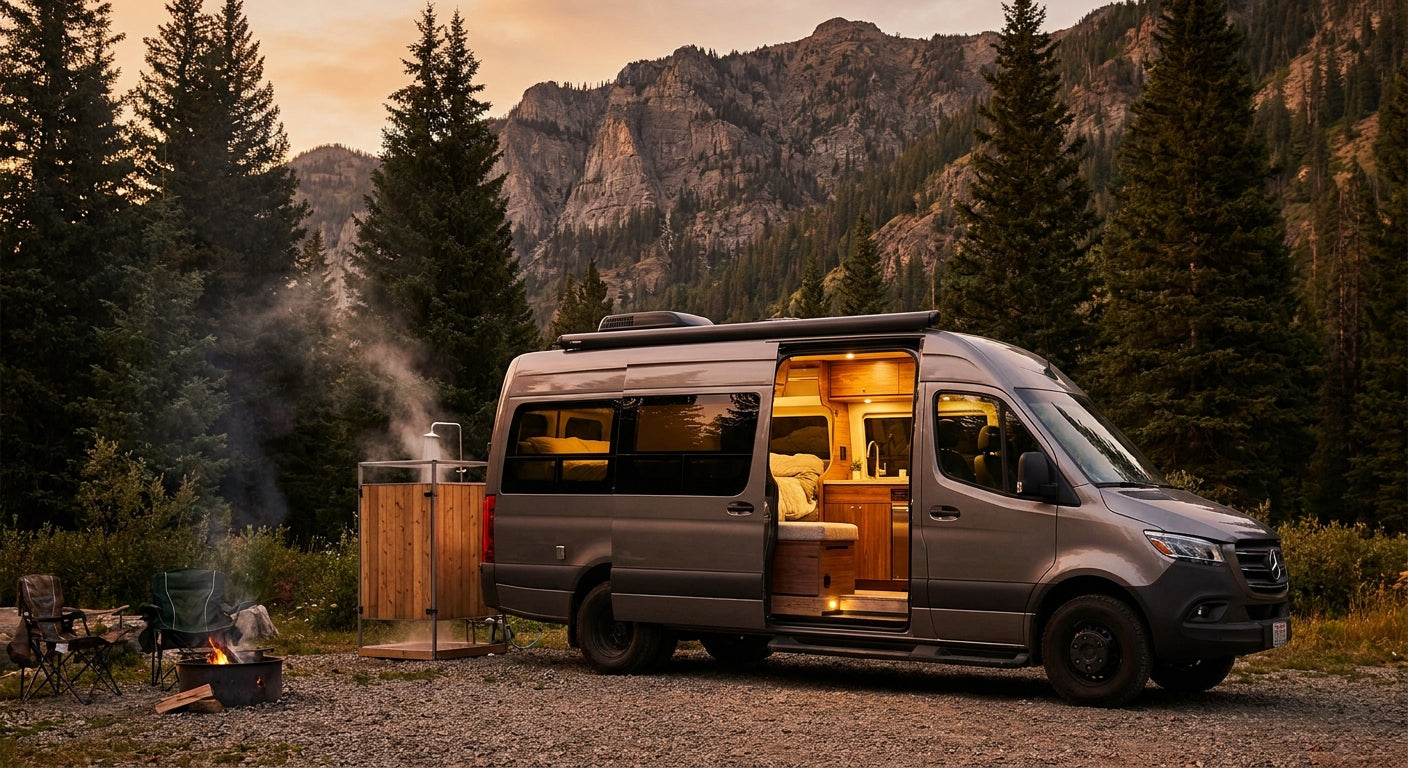
Here's the configuration most comparison articles miss: many experienced overlanders run both a built-in and a portable unit. The built-in handles interior plumbing (shower, kitchen sink), while the portable unit powers an outdoor shower station for rinsing gear, washing off trail mud, or cleaning up pets and kids before they track the outdoors inside.
The hybrid setup also solves the multi-rig scenario. If you tow a travel trailer but sometimes car camp solo, a portable unit bridges the gap and gives you hot water no matter which vehicle you're in.
For families, an outdoor shower station keeps the mess outside the rig. And considering that 95% of overlanders modify their rigs, adding a portable unit as a supplemental system fits naturally into the upgrade mindset.
There's also a practical safety net: if your built-in unit ever needs service on a remote trip, the portable unit keeps hot water flowing until you can reach a shop.
Which One Is Right for You? A Simple Decision Framework
Your ideal setup comes down to three variables: rig type, trip frequency, and water source.
- Van conversions and car campers: A portable camping water heater is the clear choice. No plumbing infrastructure needed, maximum flexibility, and you can take it anywhere.
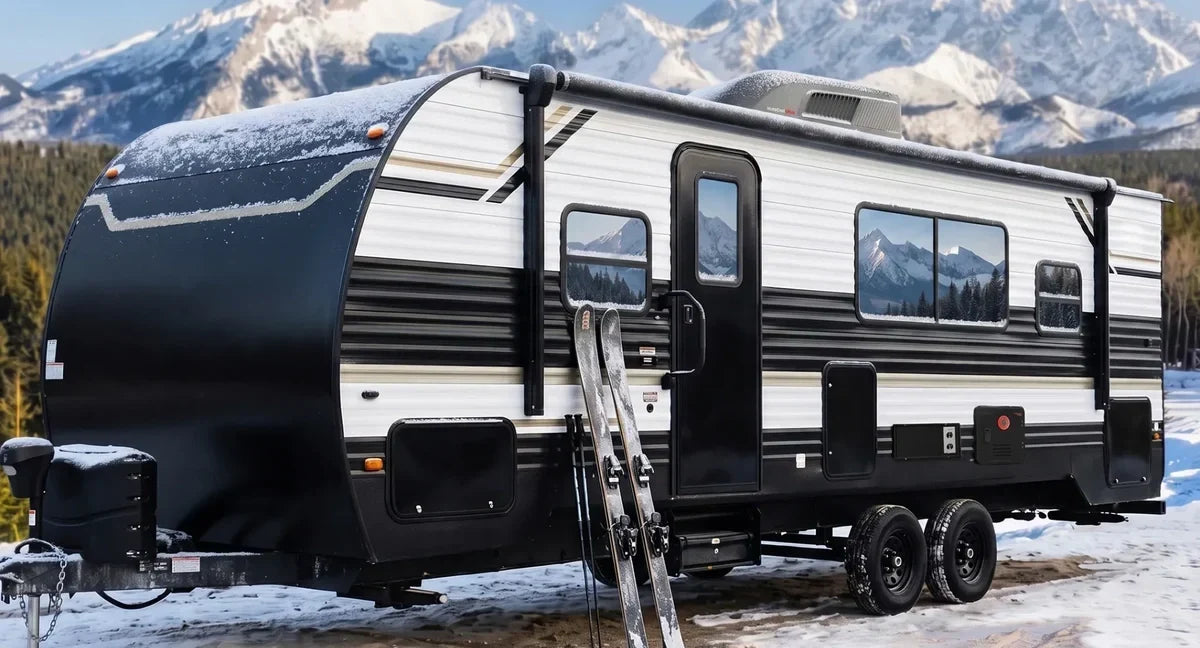
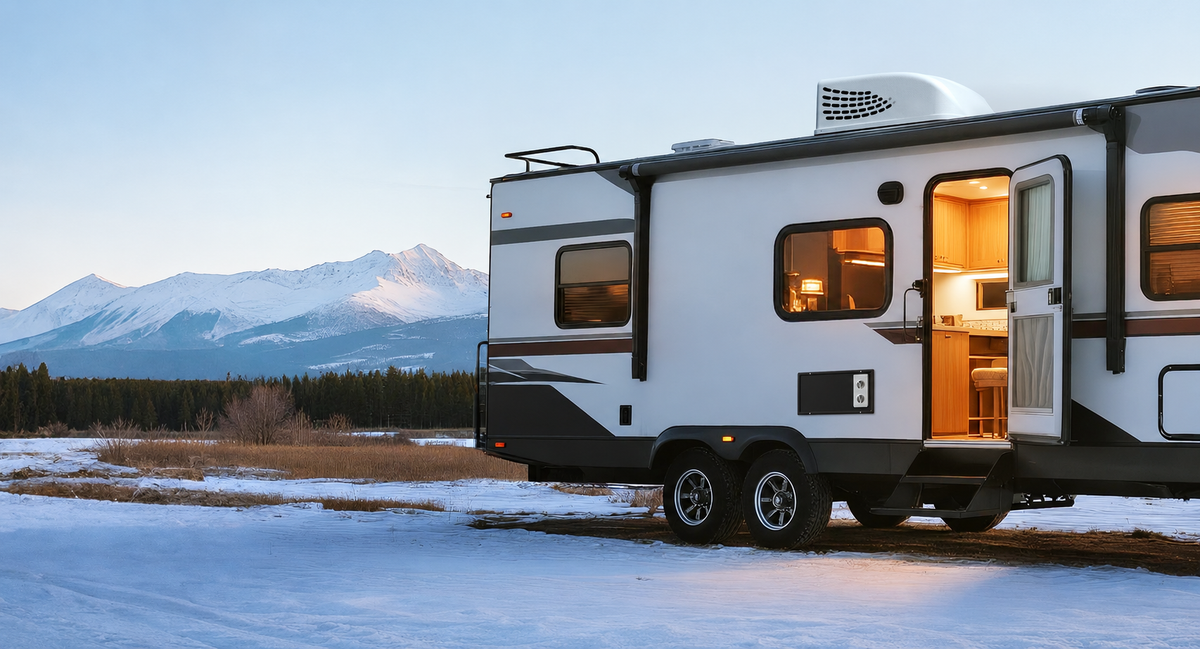
- Travel trailer and Class B/C owners who camp frequently (6+ trips per year): A built-in RV tankless water heater delivers the best long-term value and convenience. Nearly 40% of overlanders take six or more trips annually, and a permanent unit pays for itself in reliability alone.
- Budget-conscious first-rig overlanders: Start with a quality portable unit above 1.3 GPM with electronic ignition, then upgrade to built-in as your rig evolves. With Gen Z and millennials making up 72% of new overlanders, this is the most common path we see.
- Serious mountain overlanders (Rockies, Sierra Nevada, Pacific Northwest): Prioritize units with altitude adjustment capability, regardless of type. Combustion efficiency at elevation is non-negotiable.
Not sure which BTU output or flow rate matches your rig and usage? Fogatti's RV Water Heater Calculator is built to help you find the right fit based on your specific setup.
Make Every Trip Comfortable, From the First Shower to the Last
The right water heater depends on your rig, your trip style, and how often you hit the road, not just the sticker price. Portable for flexibility and van life. Built-in for permanent rigs and frequent travelers. Hybrid for serious overlanders who want both worlds covered.
Fogatti is recognized alongside Suburban, Girard, Furrion, and Dometic in Camping World's official buying guide, and we've been engineering comfort on the road since 2003, serving over 800,000 customers across 80+ countries. Every Fogatti tankless water heater comes with a free 24-month warranty, phone technical support throughout your RV experience, and fast free shipping within one business day.
Your next adventure deserves hot water that never quits. Use our RV Water Heater Calculator or explore Fogatti's full tankless lineup to find the perfect match for your rig.
Sources
- RV Trader Blog: 4 Hottest Tankless Water Heaters On The RV Market
- Woodall's Campground Magazine: Industry Report Says 12M Americans Will Overland in 2025
- Eccotemp: Portable Tankless Water Heaters: The Overlanding Game-Changer
- Ordealist: Portable Water Heaters Guide for Camping, Overlanding and Vanlife
- OutdoorCarry: The 10 Best RV Propane Tankless Water Heaters In 2026
- TheExaminerNews.com: Never Run Cold: RV Tankless Hot Water Heaters Magic
- Eccotemp: How to Choose the Best Tankless Water Heater for Your RV or Tiny Home
- Corro-Protec: Propane Tankless Water Heaters: The Complete Guide
- Overland Expo 2025 Overland Industry Report
- Under Blue Magazine: Overlanding Grows to 12 Million Americans
- Camping World Blog: Tankless RV Water Heater Buying Guide