

By: Johnny Walker
The Costly Myth: 'Tankless Means No Winterizing Needed'
Here's a statistic that should stop every RV owner in their tracks: according to a 2024 Progressive Insurance study, 89% of freeze-related RV insurance claims are denied. The reason? Insurers classify freeze damage as "preventable maintenance neglect," meaning the financial burden falls entirely on you.
The misconception fueling many of those denied claims is the belief that "tankless" means "no water inside." In reality, even tankless RV water heaters retain up to 1 liter of water internally, trapped inside heat exchanger coils, valves, and mixing chambers. That residual water is all it takes.
The physics are unforgiving. Water expands approximately 9% when it freezes, generating enough pressure to crack fittings, split pipes, and destroy your heater's internal components. Freeze damage repairs average $1,000 to $4,600, while a DIY winterization costs just $50 to $75 in supplies.
This isn't just a northern-state concern. NOAA freeze frequency data shows that 95% of the continental U.S. experiences at least one freeze event annually. By the end of this guide, you'll know exactly how to protect your RV tankless water heater before the first frost hits.
Understanding Your RV Tankless Water Heater's Freeze Vulnerabilities
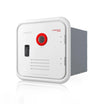
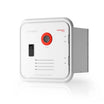
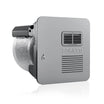
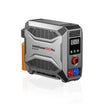
To winterize effectively, you need to understand where water hides inside your tankless unit. Every RV tankless water heater contains heat exchanger coils, inlet and outlet valves, and internal passages that trap residual water even after you've drained the system. Premium units like the Fogatti InstaShower Ultra also include a built-in mixing tank (thermostatic chamber) that delivers stable water temperatures during shoulder-season camping. This is a meaningful comfort advantage, but it adds one more component that must be fully purged during winterization.
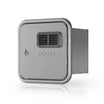
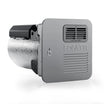
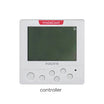
All Fogatti InstaShower models (the 7, 8 Plus, 9 Pro, and Ultra) feature a built-in freeze protection mode, displayed as "Fd" on the controller. This mode activates automatically when 12V DC power and propane remain connected, protecting the heater unit itself down to approximately 14°F (–10°C). It's a genuinely useful feature for a single cold night while you're actively camping with power and propane connected.
Here's the critical caveat most owners miss: the "Fd" mode does not protect your external RV plumbing lines, water pump, or any pipes beyond the heater unit itself. If temperatures are expected to reach or drop below 32°F, if you're disconnecting power or propane, or if you're putting your RV into storage, full manual winterization is required.
Every InstaShower model carries CSA and ETL certification, meeting North American safety standards. With over 800,000 customers across 80-plus countries and OEM partnerships with manufacturers like Thor Industries, Forest River, and Coachmen, Fogatti has engineered these protections based on real-world cold-weather data. Even the best built-in protection has limits, and knowing those limits is what separates a well-maintained RV from an expensive spring repair bill.
Two Winterization Methods: Which One Actually Works for Tankless Units?
There are two primary winterization methods for RVs: compressed air blow-out and RV antifreeze fill. In RV forums, you'll find passionate advocates for each. When it comes to tankless water heaters specifically, though, the debate has a clear winner.
Compressed Air Blow-Out
The air method uses compressed air to push water out of your plumbing lines. The key rule: never exceed the manufacturer's specified PSI. Fogatti specifies a maximum of 43.5 PSI for their units. Exceeding this can damage plumbing connections and void your warranty.
The problem is that air alone is often insufficient for tankless units. The internal geometry of heat exchanger coils creates pockets and bends where water cannot be fully expelled by air pressure alone. Forum users and professionals alike have reported freeze failures after using air-only methods on tankless heaters.
RV Antifreeze Fill
The antifreeze method pushes non-toxic, propylene glycol-based RV/marine antifreeze through the entire system. Never use automotive antifreeze, which contains ethylene glycol that can damage internal components and will void your Fogatti warranty. Most RVs require 2 to 4 gallons of RV antifreeze for a complete winterization covering the tankless heater and all plumbing lines.
The Recommended Approach: Combine Both Methods
The most reliable approach for tankless units is the combined method: air blow-out first, then antifreeze fill. This isn't just our recommendation. Camping World prohibits using their basic winterizing package on RVs with tankless water heaters, requiring an upgraded service that includes both air blow-out and antifreeze fill. That's strong third-party validation. For units with mixing tanks like the Fogatti InstaShower Ultra, the combined method is especially important to ensure every internal chamber is fully protected.
Step-by-Step: How to Winterize Your RV Tankless Water Heater
Print this checklist or save it on your phone. This is your field-ready winterization guide.
- Gather your supplies: Non-toxic propylene glycol RV antifreeze (2 to 4 gallons), an air compressor set to a maximum of 43.5 PSI, a bypass valve kit (if not already installed on your fresh water tank), and a hand pump or antifreeze kit for your water pump inlet.
- Shut everything down: Turn off the water heater. Disconnect propane and 12V DC power. Allow the unit to cool completely before proceeding. Rushing this step risks burns and incomplete drainage.
- IMPORTANT: Do NOT bypass the tankless water heater. This is the single biggest mistake RV owners make. Unlike traditional tank heaters, bypassing a tankless unit prevents antifreeze from reaching internal components, leaving the heater completely unprotected. The antifreeze must flow through the unit.
- Open all faucets and drains: Open every hot and cold faucet, the outdoor shower, and all low-point drains. Let gravity do the initial work of pulling water out of the system.
- Blow out with compressed air: Connect your air compressor (at or below 43.5 PSI) and blow out each line, starting from the farthest point from the water pump and working toward the heater. Repeat 2 to 3 times per line to maximize water removal.
- Switch to antifreeze fill: Connect your hand pump or antifreeze kit to the water pump inlet. Pump antifreeze through the system until pink fluid appears at every faucet, including the hot water side. Don't forget the toilet, outdoor shower, and ice maker line if applicable.
- Confirm antifreeze has reached the tankless heater's internals: Run the hot water side until pink fluid flows steadily. For Fogatti InstaShower Ultra owners, this confirms antifreeze has reached the mixing tank (thermostatic chamber), which is essential for full protection.
- Close up and document: Close all faucets. Note the "Fd" mode status on your controller. Record the winterization date, method used, and antifreeze brand for your records. This documentation matters for both warranty claims and insurance purposes.
The entire process takes one to two hours. That small investment of time protects thousands of dollars in equipment and preserves your entire next camping season.
Why the Fogatti InstaShower Ultra Is Built for Cold-Weather RVing
Choosing the right water heater reduces cold-weather risk from the start. The Fogatti InstaShower Ultra was engineered with year-round RV living in mind, and its specs reflect that commitment.
With 66,000 BTU of output and a 0.5 to 3.9 GPM flow range, the Ultra delivers powerful, consistent hot water even when incoming water temperatures drop during cold-weather camping. The 0.5 GPM ultra-low flow startup is especially critical in winter conditions, when campground water pressure may be reduced or when you're running off a gravity-fed system.
The built-in mixing tank (thermostatic chamber) is a standout feature for cold-weather campers and full-timers. Standard tankless units are prone to temperature fluctuations, sometimes called the "cold-water sandwich" effect. The Ultra's mixing tank smooths those fluctuations, delivering a more comfortable and predictable shower experience during shoulder-season and winter use.
HydroShield-Tech weather resistance and altitude capability up to 9,800 feet address the dual challenge faced by mountain campers: high-altitude performance combined with freeze risk. Whether you're boondocking in the Rockies or parked at a campground in the Appalachians, the Ultra is designed to perform.
Every Fogatti InstaShower comes with a 24-month free warranty and phone technical support. If you have winterization questions specific to your model, our support team is a phone call away. Just remember: the Ultra's mixing tank means you should always follow the full antifreeze method (not air-only) to ensure complete protection of this premium feature.
Don't Skip This: Warranty, Insurance, and the Real Cost of Skipping Winterization
Let's talk about what's really at stake. Freeze damage repairs average $1,000 to $4,600, and RV service departments report 4 to 6 week wait times during spring months. That's not just a financial hit; it can cost you an entire camping season.
The insurance angle makes it worse. As noted earlier, Progressive Insurance data shows that 89% of freeze-damage RV claims are denied due to "preventable maintenance neglect" exclusions. Winterization isn't just maintenance anymore. It's a financial protection strategy.
From a warranty perspective, Fogatti's position is clear: freeze damage caused by failure to winterize is explicitly not covered under the 24-month warranty. Improper winterization, such as using automotive antifreeze or bypassing the tankless unit, can also void coverage. Following the correct procedure protects both your equipment and your warranty standing.
The damage often doesn't stop at the water heater. According to RV Industry Association data, 73% of freeze-damaged RVs develop secondary issues including mold growth, electrical problems, and structural water intrusion. What starts as a cracked fitting can cascade into thousands of dollars in compounding repairs.
Our recommendation: document everything. Record the date, the method you used, and the brand of antifreeze. Take photos if possible. This documentation serves as evidence for both warranty claims and insurance purposes. Even a single night below 30°F can cause freeze damage in unprotected plumbing. Shoulder-season campers are not exempt.
Winterize with Confidence: Your RV Adventure Doesn't Have to End at First Frost
Here are the three takeaways that matter most:
- Tankless water heaters do hold residual water and must be winterized.
- The "Fd" freeze protection mode protects the heater unit only, not your full plumbing system.
- The combined air blow-out plus antifreeze method is the most reliable approach for tankless units.
Proper winterization is a one-to-two hour DIY task that protects thousands of dollars in equipment and keeps your next season on track. If you're evaluating an upgrade or replacement before winter, our RV Water Heater Calculator can help you find the right fit for your rig.
If you're ready to invest in a water heater built for year-round adventure, explore the Fogatti InstaShower lineup, particularly the InstaShower Ultra for full-timers and cold-weather adventurers. Our phone technical support team is here to help with any winterization questions specific to your model.
The road doesn't close in October. With the right preparation and the right equipment, year-round RV living is fully within reach. Get out there.